
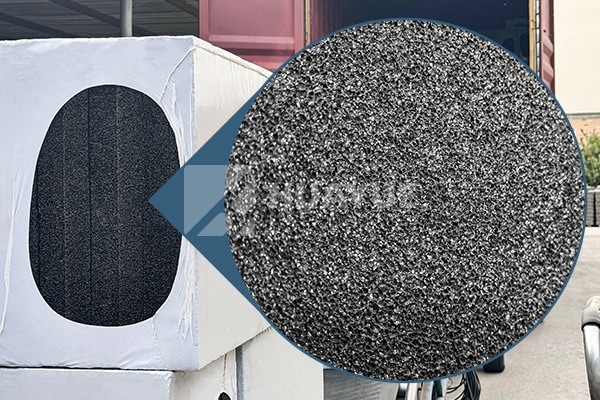
When buyers search for glass cell insulation, they usually mean cellular glass insulation—a rigid, closed-cell material for thermal and moisture control.
Glass cell insulation is the informal search phrase; the technical category is cellular glass, also called foam glass. It is a rigid inorganic insulation made from glass cells, selected when water, fire, chemical exposure, or mechanical stability matter.
This guide explains the terminology, common applications, moisture and fire boundaries, and the practical difference between cellular glass and fiberglass.
What Is Glass Cell Insulation?
The phrase “glass cell insulation” is easy to confuse with glass wool because both contain the word glass.
Glass cell insulation usually means cellular glass or foam glass: glass processed into a rigid, closed-cell insulation, not glass wool or fiberglass.
The difference starts with structure. The National Insulation Association explains that cellular insulation is formed from individual cells that may be open or sealed, while fibrous insulation is made from small-diameter fibers that divide the air space. Cellular glass belongs to the first category; glass wool belongs to the second.
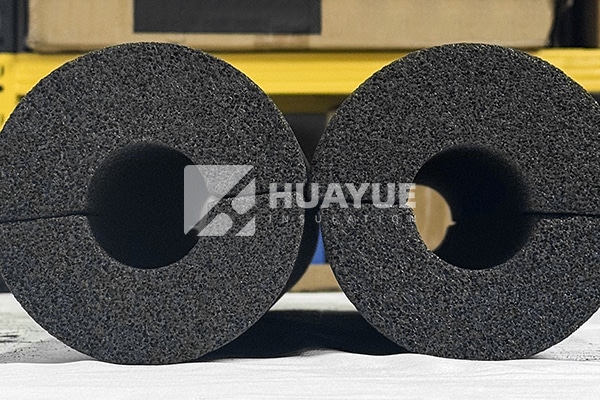
In practical terms, cellular glass is a rigid inorganic material with a matrix of sealed glass cells. Manufacturer references describe it as a material made of completely sealed glass cells, with forms that can include board segments, pipe coverings, fittings, or curved sections for equipment and tanks. The exact product form, density, thermal data, and test method still need to be matched to the application.
The term “foam glass” is also common. It does not mean every plastic foam product. It identifies glass that has been processed into a cellular structure. That distinction matters when a quotation, specification, or search result uses the broad word “foam” without naming the chemistry.
| Material category | Basic structure | Selection question | What must not be assumed |
|---|---|---|---|
| Cellular glass | Sealed glass cells in a rigid inorganic body | Are moisture, fire, rigidity, or chemical exposure important? | A generic property applies to every product or assembly |
| Glass wool / fiberglass | Fine glass fibers, usually supplied as flexible or semi-rigid products | Is a fibrous form suitable for the space and system? | It has the same water and mechanical behavior as cellular glass |
| Plastic foam | Polymer cells, with properties affected by chemistry, facers, and installation | Is the specified foam compatible with temperature and fire requirements? | “Foam” alone identifies a material or a performance level |
For building products, ISO 20812:2026 describes factory-made cellular glass products and test methods, but it also states that system performance is outside its scope and that the standard does not cover industrial installations. That is a useful specification boundary: identify the product standard, then evaluate the complete assembly and service conditions separately.
What Is Glass Cell Insulation Used For?
The main use of glass cell insulation is to control heat flow while adding a rigid, moisture-resistant material option for demanding assemblies.
Cellular glass is used in building envelopes, roofs, below-grade areas, pipes, tanks, vessels, and process equipment when the design needs a combination of thermal insulation, closed-cell moisture resistance, and dimensional stability.
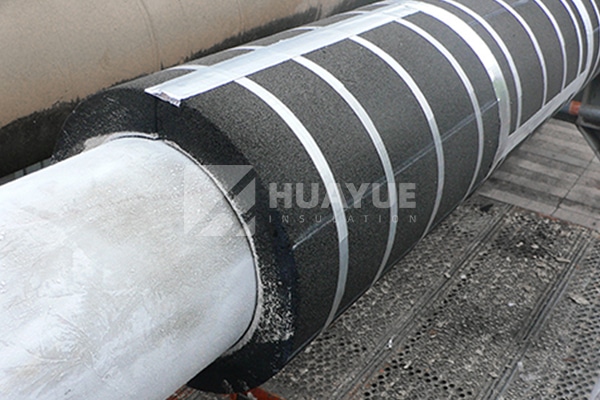
The required form changes with the object being insulated. Boards or slabs may suit flat roofs, walls, floors, and equipment surfaces. Pipe sections and fittings are shaped for straight runs, bends, valves, and other geometry. Curved segments or fabricated shapes can be used around tanks and vessels. Gravel or other granular forms belong to different building and civil applications and should not be treated as interchangeable with a pipe or equipment product.
Industrial insulation is a clear example of why the form matters. SPI describes cellular glass for piping, fittings, equipment, and tanks, including low- and high-temperature process systems, underground or above-ground steam distribution, chilled piping, and commercial ductwork. Those are application categories, not a blanket approval for every project. The selected product, joint design, protective finish, supports, and operating conditions still control the system result.
For building work, ISO 20812 identifies slabs, faced or unfaced boards, and one-sided blocks for building thermal insulation. It does not turn those products into a universal answer for industrial equipment. A buyer should therefore map the application in this order:
- Identify the insulated object: roof, wall, foundation, pipe, tank, vessel, duct, or equipment.
- Identify the dominant exposure: indoor, outdoor, underground, wet, cryogenic, hot, chemically aggressive, or mechanically loaded.
- Select a product form that fits the geometry and installation method.
- Confirm the product data and the complete system design under the project’s conditions.
For a broader application overview, the existing BoroCell foam glass uses article can serve as an internal route, while this article keeps the focus on the “glass cell insulation” terminology and the questions buyers ask before comparing materials.
Is Glass Cell Insulation Waterproof?
Water resistance is one of the main reasons cellular glass appears in industrial and below-grade insulation discussions.
The cellular-glass core is highly resistant to liquid water and water vapor because its cells are sealed, but the finished insulation system still depends on joints, facings, sealants, drainage, and protective detailing.
The closed-cell structure limits absorption and capillary movement through the core. SPI’s technical overview describes cellular glass as water resistant, vapor-barrier-forming, and non-absorbent to liquids. This property can be valuable when insulation is exposed to humidity, rain, soil contact, condensation risk, or process-area washdown.
The important qualification is the word “core.” Water can still reach the insulated surface through open joints, damaged edges, unsealed penetrations, failed jacketing, or poor transitions around supports and fittings. A water-resistant material does not make an incorrectly detailed assembly watertight. It also does not remove the need to manage vapor drive, condensation, drainage, and corrosion risk at the system level.
| Checkpoint | Why it matters |
|---|---|
| Core material | Confirms the cellular structure and the product’s reported water and vapor behavior |
| Edges and joints | Gaps can become the path for water or vapor even when the core does not absorb it |
| Jacketing or facing | Protects the insulation from impact and weather and may affect fire or vapor performance |
| Supports and penetrations | Local details can create thermal bridges, leaks, or condensation points |
| Drainage and substrate | Prevents standing water from remaining around the assembly |
This is why “waterproof” should not be the only line in an RFQ. Ask whether the claim applies to the cellular-glass material, a faced product, or a tested assembly. For industrial equipment, also confirm the compatible adhesive, mastic, vapor-sealing method, and outer protection. The right answer is not simply that water cannot enter the glass cells; it is whether the complete design keeps moisture away from the equipment and maintains the intended thermal boundary.
Is Glass Cell Insulation Fireproof?
“Fireproof” is a common search term, but technical specifications usually need a narrower statement about combustibility and assembly performance.
Cellular glass is an inorganic, non-combustible insulation material, but that fact alone is not a fire rating for the complete insulated assembly, including facers, adhesives, jacketing, and supports.
Cellular glass gets its fire-related value from its inorganic glass composition rather than from an organic polymer matrix. Owens Corning’s FOAMGLAS overview describes cellular glass as non-combustible and notes that the fire statement for the material is distinct from the behavior of facers. This is the right way to read a fire claim: confirm what was tested, in what configuration, and under which standard.
For a buyer, the distinction prevents three common errors. First, a non-combustible core is not automatically a fire-rated wall, roof, tank, or pipe assembly. Second, adhesives, coatings, vapor barriers, and jacketing may introduce different fire behavior. Third, a product’s classification in one country or test method may not satisfy a local code or a project specification that uses another method.
When fire is a design driver, request the following before approval:
- The product’s combustibility or reaction-to-fire evidence, with the named product and revision.
- The test method, classification system, and scope of the result.
- The composition and fire behavior of facers, adhesives, coatings, and jacketing.
- The required assembly or system rating, if the project specifies one.
- The temperature, ventilation, and installation conditions relevant to the equipment.
The same discipline applies to high-temperature claims. A generic cellular-glass description cannot replace a product datasheet or system design for a hot line, cryogenic vessel, or fire-exposed installation. Use the category-level benefit to shortlist the material, then use the named product evidence to make the engineering decision.
Is Glass Cell Insulation the Same as Fiberglass?
Both materials are glass-based, but they are not the same insulation category and should not be compared by name alone.
No. Cellular glass is a rigid, closed-cell glass material; fiberglass is a fibrous insulation, so their moisture, flexibility, mechanical, and installation trade-offs are different.
The National Insulation Association separates cellular and fibrous insulation: cellular materials contain individual cells, while fibrous materials use small-diameter fibers to divide air space. This difference affects how each material is supplied, cut, supported, protected, and evaluated in service.
Cellular glass is usually considered when the project needs a rigid form and wants the closed-cell behavior of glass. Fiberglass may be attractive where a flexible or semi-rigid fibrous product fits the cavity, duct, or building assembly and where the design does not require cellular glass’s specific moisture or mechanical profile. Neither statement makes one material universally better. A material can be technically suitable in one location and inefficient or difficult to install in another.
| Decision factor | Cellular glass | Fiberglass / glass wool |
|---|---|---|
| Structure | Rigid, closed-cell glass | Fibrous glass structure |
| Common form logic | Boards, pipe sections, fittings, and fabricated shapes | Batts, blankets, boards, or other fibrous forms |
| Moisture question | Does the closed-cell core and sealed system meet the exposure? | Does the facing and assembly protect the fibrous product from wetting? |
| Mechanical question | Can the rigid product and joints handle the loads and geometry? | Does the flexible product need support, compression control, or protection? |
| Best comparison method | Match product grade, form, temperature, and system details | Match product grade, facing, form, temperature, and system details |
The fair comparison is therefore not “cellular glass versus fiberglass” in the abstract. Compare the exact products at the same design temperature and thickness, then review fire, moisture, mechanical, acoustic, installation, and maintenance requirements. A high headline value from one material does not answer a project question if the test condition, product form, or assembly is different.
If you are evaluating glass cell insulation for a pipe, tank, vessel, roof, or equipment surface, start with two simple inputs: what is being insulated and the approximate operating condition. Drawings, target thickness, quantity, and document requirements can follow once the material family and form are clear.
Conclusion
Choose cellular glass by material form, operating conditions, moisture path, fire scope, and system details—not by the phrase “glass cell insulation” alone.