
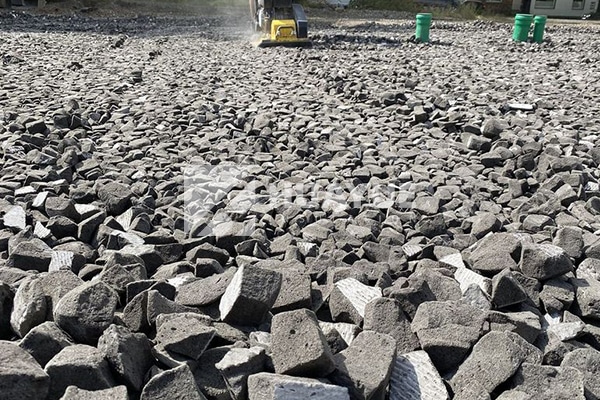
Glass foam insulation is a rigid cellular-glass material used when a project needs thermal insulation together with moisture resistance, rigidity, or compressive capacity.
Glass foam insulation is made by foaming and annealing glass into a cellular solid. Closed-cell grades can combine low heat transfer with resistance to liquid-water uptake and vapor movement, but the selected product and installed system still require verification.
The terms foam glass, foamed glass, and cellular glass often overlap in search results. This guide separates the material principle from the product form, application, and evidence a B2B buyer should request.
What Is Glass Foam Insulation?
Glass foam insulation is a glass-based cellular solid, not fiberglass wool and not a plastic foam filled with glass.
Glass foam insulation uses gas-filled cells to interrupt heat flow while glass cell walls provide a rigid matrix. The exact performance depends on cell structure, grade, form, test method, and the complete assembly.
In technical use, foam glass, foamed glass, and cellular glass are closely related terms. The broader phrase “glass foam” can describe open-cell or granular materials, while cellular-glass thermal insulation normally refers to a rigid product engineered for insulation. That distinction matters: a material name alone does not establish water absorption, vapor permeability, compressive strength, thermal conductivity, fire behavior, or suitability for a particular temperature.
ASTM C552 describes cellular glass thermal insulation as glass that has been foamed or cellulated under molten conditions, annealed, and set into a rigid material with sealed cells. It also covers qualification properties such as compressive strength, water absorption, water-vapor permeability, thermal conductivity, hot-surface performance, and surface-burning characteristics. The standard’s scope is for commercial and industrial systems; it specifically directs building-envelope users to the relevant building-application specification instead of treating every application as the same.
The cell structure is the central design idea. Gas-filled pores reduce the amount of solid material through which heat can travel, while the glass matrix provides shape and load transfer. Closed cells can restrict pathways for liquid water and vapor, but the result still depends on how the product is made and tested. Open-cell glass foam or glass-foam aggregate may be selected for different functions and should not automatically be substituted for a closed-cell board or pipe section.
For procurement, identify four things before comparing offers: the material category, the physical form, the named grade, and the intended assembly. A standard can define the test framework, but it does not make an unnamed product automatically compliant or guarantee the performance of an installed system.
How Is Glass Foam Insulation Made?
The manufacturing route turns prepared glass and a foaming agent into a rigid body whose pore size and connectivity affect insulation and mechanical behavior.
Glass foam insulation is generally produced by preparing glass feedstock, adding a foaming agent, heating the mixture until gas expands within softened glass, then cooling and annealing the cellular body before fabrication.
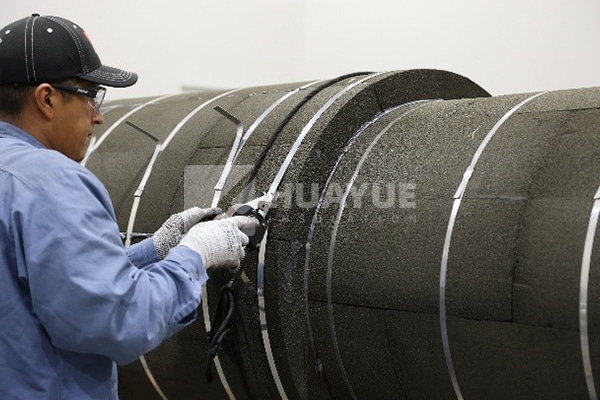
The process commonly begins with glass that is cleaned, sized, and ground into a controlled feedstock. Depending on the product route, the glass may be new, recycled, or a defined blend. A foaming agent is mixed into the powder or melt. During heating, the glass softens and the agent releases or promotes gas formation. The gas expands inside the viscous glass, creating a network of pores. Controlled cooling and annealing stabilize the structure before the material is cut into blocks or boards, fabricated into pipe and fitting sections, or crushed and screened into granular forms.
Process variables are not cosmetic. Glass chemistry, particle size, foaming-agent content, heating rate, peak temperature, holding time, cooling rate, and annealing can change pore size, density, cell connectivity, dimensional stability, strength, and thermal conductivity. More porosity may reduce heat transfer but can also change load response. Greater open connectivity can create different moisture and vapor behavior from a predominantly closed-cell structure.
This is why a generic manufacturing description should not be used to predict a product specification. Two materials can both be called glass foam while differing in cell structure, form, grade, and test results. A technical submittal should identify the exact product and show the declared properties, test method, reference condition, and revision date behind each value.
Manufacturing also influences fabrication quality. Boards, pipe sections, and fittings need accurate cutting and compatible joint details; granular products need grading, bulk-density control, separation layers, and a defined placement method. The manufacturing process creates the material, but the finished application depends on product geometry and installation practice as well.
What Are the Benefits of Glass Foam Insulation?
Glass foam is considered when one insulation layer must address more than heat flow alone.
A suitable closed-cell glass foam grade may offer thermal insulation, moisture resistance, rigidity, inorganic fire behavior, and compressive capability. These are selection criteria—not universal guarantees for every product or system.
The first benefit is thermal control: gas-filled cells reduce heat transfer, while the declared conductivity depends on the grade, cell structure, density, mean temperature, moisture condition, and test method. The second is moisture control. A closed-cell material can reduce liquid-water uptake and vapor pathways through the insulation itself, which is useful in wet, buried, chilled, or condensation-sensitive locations. Joints, cut edges, sealants, jacketing, membranes, and drainage remain part of the moisture design.
Rigidity and compressive response can be valuable below slabs, beneath tank bases, around supports, or in other locations where soft insulation could be compressed. That does not mean every glass-foam product is load-bearing. The engineer still needs the actual compressive data, bearing area, point-load condition, support spacing, safety factor, and temperature range for the selected grade.
Because the matrix is glass and inorganic, fire behavior is assessed differently from that of organic polymer foams. The relevant result remains the tested classification of the named product or assembly under the required standard. Material-level behavior should never be converted into a fire-resistance period for a wall, roof, tank, or piping system without matching assembly evidence.
| Project priority | Why glass foam may be considered | What the buyer should verify |
|---|---|---|
| Moisture or condensation control | Closed-cell structure can limit moisture pathways through the insulation | Water absorption, vapor permeability, joints, jacketing, and drainage details |
| Load or shape retention | Rigid glass matrix can support a designed load when the grade and geometry are suitable | Compressive strength, bearing area, point loads, supports, and safety factors |
| Fire-sensitive location | Inorganic glass material can be evaluated for non-combustible or surface-burning behavior | Product classification, facings, adhesive, and complete assembly scope |
| Cold or hot service | The material family is used in demanding temperature environments | Grade, operating range, thermal cycling, joint design, and installation method |
There are limitations. Glass foam is rigid and can be brittle at edges, so impact, cutting, handling, and joint workmanship matter. Rapid temperature changes can also create stress concerns; ASTM C552 notes a potential for stress cracks when the rate of temperature change exceeds the condition stated in its scope. Select glass foam for a defined project risk, not because a short list of material benefits sounds universal.
Where Is Glass Foam Insulation Used?
The right form depends on geometry, temperature, load, moisture exposure, and how the insulation will be protected after installation.
Glass foam insulation is used in selected building-envelope, below-grade, piping, equipment, tank-base, vessel, and lightweight-fill applications. Boards, pipe sections, fittings, blocks, and gravel are different products and are not interchangeable.
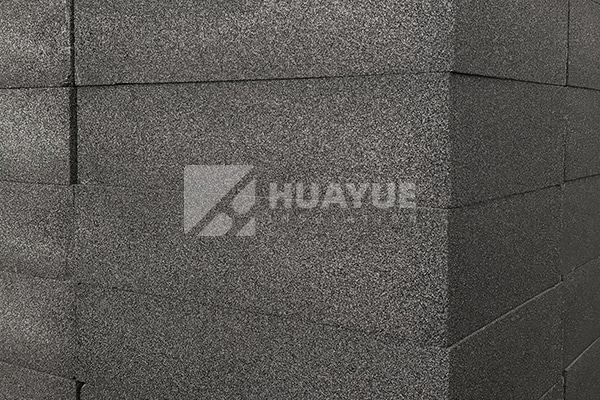
Common form-to-application routes include:
- Boards, panels, or slabs: Considered for roofs, façades, walls, floors, foundations, and other relatively flat assemblies. Review the substrate, distributed and point loads, thermal bridges, joints, finish layers, and waterproofing system as one design.
- Pipe or tube sections: Used for straight piping and related equipment where geometry, operating condition, supports, vapor control, cladding, and joint arrangement must work together. ASTM C1639 addresses fabrication of cellular-glass pipe and tubing insulation and emphasizes joint control because installed thermal performance depends on fabrication details.
- Fittings and fabricated shapes: Used around elbows, reducers, heads, supports, tees, valves, and vessel geometries. The drawing, tolerances, attachment method, and adjacent insulation layers determine whether a shape is suitable.
- Blocks and tank-base elements: Considered where a rigid insulation layer must coordinate with a designed load path. The base, support, settlement, temperature, and protection layers need project review.
- Gravel or granular fill: Used in selected below-grade, under-slab, roof, road, drainage, or landscaping applications as a lightweight insulating fill. Grading, bulk density, compaction, groundwater, separation layers, and the surrounding assembly control the result.
BoroCell’s cellular glass insulation product route provides a starting point for identifying boards, pipe products, fittings, and gravel routes. Use it to locate the relevant form, then request the current named-product documentation before placing a technical requirement or performance value into a specification. For building-envelope work, the BoroCell building-envelope route should remain the application-specific destination rather than duplicating deep project guidance in a material article.
The most useful first inquiry is simple: state the application, approximate operating condition, and product form you believe you need. Add drawings, dimensions, thickness, quantity, destination, packaging, and document requirements after the material route is confirmed.
Is Glass Foam Insulation Waterproof?
“Waterproof” is a common search phrase, but the technically useful answer separates the material from the installed system.
Closed-cell glass foam can resist liquid-water uptake and vapor movement at the material level, but no insulation system is automatically waterproof. Joints, cut edges, membranes, sealants, penetrations, cladding, drainage, and workmanship still control installed moisture protection.
The sealed-cell concept explains why glass foam is considered for wet soil, rain, groundwater, condensation, chilled service, and other moisture-sensitive conditions. However, water performance should be expressed through the test data for the selected grade: water absorption, vapor permeability, exposure condition, and test method. “Closed cell” is a useful material description, not a substitute for a project-specific acceptance criterion.
Moisture usually reaches an installed system through details rather than through an intact cell wall. Possible pathways include unsealed joints, damaged edges, cracks, penetrations, open cladding laps, failed coatings, poor drainage, and construction damage. On cold piping and equipment, the vapor-control layer and support details are especially important. On below-grade work, the design should account for groundwater, hydrostatic pressure, drainage, soil conditions, protection layers, and sequencing.
ASTM C1639 is a useful reminder that fabrication affects installed performance: its scope discusses pipe and tubing fabrication and the importance of limiting joints, particularly through joints. The same principle applies more broadly. A moisture-resistant material can still be installed with an avoidable leakage path, and a good product can be damaged by unsuitable handling or protection.
Glass foam may support a corrosion-under-insulation risk-management strategy, but it does not eliminate CUI by itself. Coating condition, water management, inspection, maintenance, temperature cycling, joint sealing, and the operating environment remain part of the engineering decision. When a specification says “waterproof,” convert the word into measurable requirements and assign them to the product, assembly, and installation scopes separately.
Conclusion
Choose glass foam insulation by cell structure, form, and verified data against the project’s thermal, moisture, load, and temperature requirements. Share the application and operating condition for a route review.