

Foam glass is a high-performance insulation material widely used for thermal and moisture protection in construction and industrial projects.
Foam glass is mainly used for thermal insulation, moisture protection, fireproofing, and energy efficiency in buildings and industrial facilities. It is lightweight, non-combustible, and resistant to water absorption, making it suitable for roofs, walls, pipes, and below-ground structures.
What is foam glass used for?
Foam glass is used as a thermal and moisture insulation material in a variety of construction and industrial applications. Its closed-cell structure, made from crushed glass and foaming agents, gives it unique properties that are valued in demanding environments.
Key applications include:
- Building insulation: Foam glass boards and blocks insulate roofs, walls, and floors, providing both thermal efficiency and moisture resistance.
- Industrial piping: Foam glass pipe sections insulate hot and cold process pipes, especially in chemical plants, refineries, and power stations, due to their chemical inertness and fire resistance.
- Underground and foundation insulation: Foam glass gravel and boards prevent frost heave and moisture ingress in subgrade and foundation systems.
- Tank and vessel insulation: Used for insulating storage tanks, especially those containing cryogenic or high-temperature substances.
- Flat roofs and green roofs: Its compressive strength makes it suitable for load-bearing insulation under membranes or soil layers.
Foam glass is also valued for its non-combustibility, pest resistance, and long service life. These benefits support sustainable building designs and help meet strict fire safety and durability requirements.
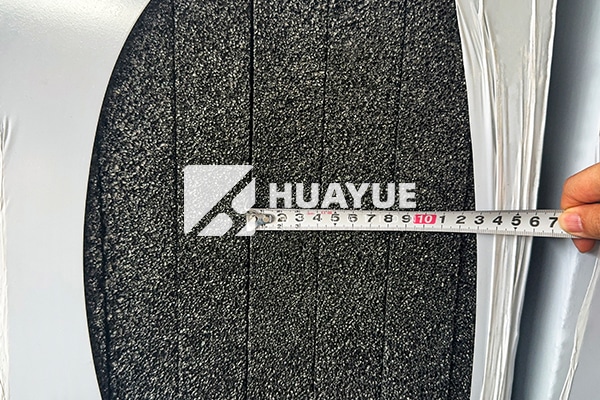
Foam Glass Application Comparison Table
| Application Area | Typical Foam Glass Form | Key Benefit | Typical Specification |
|---|---|---|---|
| Roof insulation | Board, block | Thermal & moisture barrier | 45–180 mm thickness |
| Pipe insulation | Pipe | Fireproof, non-absorbent | DN15–DN600, various IDs |
| Foundation insulation | Board, gravel | Frost & water resistance | 100–500 mm thickness |
| Tank/vessel insulation | Block, board | Chemical inertness | Custom sizes available |
| Green roof | Board, gravel | Load distribution, insulation | 50–300 mm thickness |
Is foam glass waterproof?
Foam glass is highly resistant to water absorption due to its closed-cell glass structure. It does not allow water or vapor to penetrate, making it an ideal choice for environments where moisture control is critical.
Practical details:
- Zero capillarity: Water cannot move through foam glass by capillary action, making it suitable for direct contact with soil or wet substrates.
- No wicking: Unlike fibrous insulation, foam glass does not wick water, minimizing the risk of moisture-related thermal performance loss.
- Vapor barrier: Its vapor-tight properties help prevent condensation and protect structural elements from corrosion or mold.
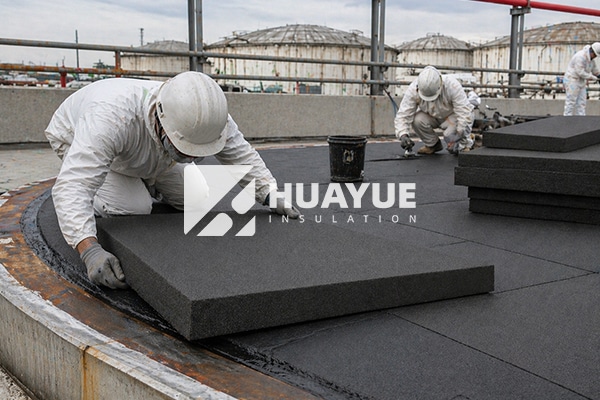
Selection advice: For below-grade insulation or areas exposed to water, confirm the foam glass is supplied with the correct compression strength and edge profile for the application.
Can foam glass get wet?
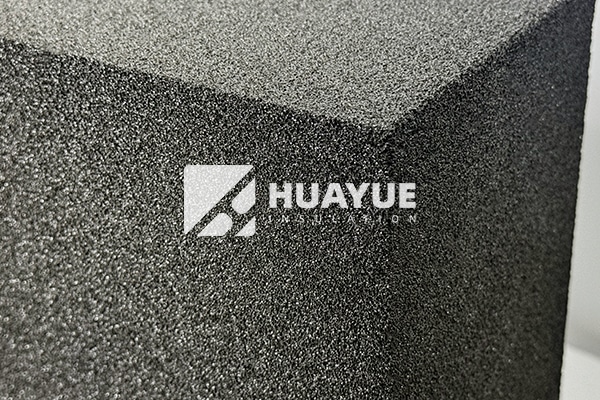
Foam glass itself does not absorb or retain water, even if exposed to wet conditions. Its closed-cell glass matrix ensures that any water on the surface can be easily drained or evaporated without affecting the core material.
Practical considerations:
- Temporary wetting: Surface water from rain or flooding will not penetrate foam glass. It remains dimensionally stable and retains its insulation value.
- Drying process: If used in applications where it may be submerged or exposed to standing water, ensure that the installation allows for drainage so that water does not pool around or under the insulation.
- Long-term durability: Foam glass does not rot, degrade, or support mold growth, even after repeated wetting and drying cycles.
What should B2B buyers know about foam glass uses?
B2B buyers should consider the specific form and grade of foam glass for their application. Foam glass is available as boards, pipes, blocks, and gravel, each tailored for different uses.
Key factors:
- Customization: Reputable suppliers offer custom cutting, shaping, and density options. Specify dimensions, compressive strength, and thermal conductivity required for your project.
- Packaging and logistics: Foam glass is typically supplied in shrink-wrapped bundles or pallets. For large projects, confirm packaging type, shipment method, and lead time.
- Quality consistency: Check for batch-to-batch consistency, especially for large-scale installations. Request technical data sheets and product samples as needed.
- Lifecycle cost: While initial costs may be higher than some alternatives, foam glass’s durability and performance can result in lower long-term maintenance and replacement expenses.
What should B2B buyers know about foam glass uses?
B2B buyers should also evaluate supplier reliability and compliance with relevant standards. Foam glass insulation must meet project specifications for fire safety, compressive strength, and environmental regulations.
Practical guidance:
- Supplier evaluation: Choose suppliers with proven track records in international projects and the ability to provide documentation for product properties and performance.
- Certification: While foam glass is inherently non-combustible and chemically stable, confirm compliance with local or project-specific standards (e.g., EN, ASTM, ISO).
- Lead time and availability: For large or custom orders, clarify production schedules, minimum order quantities, and delivery timelines.
- Sustainability: Foam glass is often made from recycled glass, supporting green building certifications and sustainability goals.
FAQ
Q1: Does foam glass provide sound insulation?
A1: Yes, foam glass also offers sound absorption, especially in wall and roof assemblies, due to its cellular structure.
Q2: Is foam glass suitable for high-temperature applications?
A2: Foam glass can be used in high-temperature environments, typically up to 430°C, making it suitable for industrial and process insulation.
Q3: Can foam glass be used in contact with soil?
A3: Yes, foam glass gravel and boards are ideal for contact with soil as they do not absorb water or degrade.
Q4: How is foam glass installed?
A4: Foam glass boards and pipes are installed using adhesives, mechanical fasteners, or mortar, depending on the application and substrate.
Q5: Is foam glass resistant to chemicals?
A5: Foam glass is chemically inert and resistant to most acids, alkalis, and solvents, making it ideal for harsh environments.
Conclusion
Foam glass offers robust solutions for thermal and moisture insulation in demanding construction and industrial applications. Its unique properties support long-term performance, fire safety, and sustainability for B2B projects.