
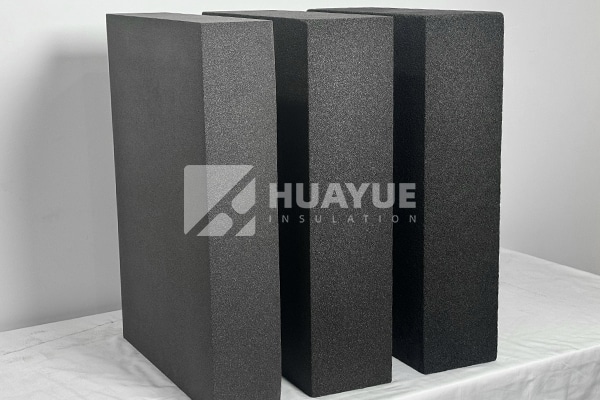
Choosing a cellular glass block manufacturer starts with understanding the material, the product form, and the evidence behind the offer.
Cellular glass blocks are rigid, closed-cell glass insulation products. Foam glass is the usual synonym for the material category, while fiberglass is a different, fibrous glass product. Several manufacturers supply cellular glass, including HUAYUE under the BoroCell® brand for borosilicate block lining applications.
The practical sourcing question is not only who can quote a block. It is whether the manufacturer can match the glass composition, block form, operating environment, documentation, and system details to the project.
Is Foam Glass the Same as Cellular Glass?
Two names often appear in specifications, search results, and supplier quotations for what looks like the same insulation material.
In insulation terminology, foam glass and cellular glass generally describe the same material family: glass processed into a rigid, predominantly closed-cell structure. “Cellular glass block” adds the product-form detail that the material is supplied as a block.
ASTM C552 describes cellular glass thermal insulation as a glass composition foamed or cellulated under molten conditions, annealed, and set into a rigid material with hermetically sealed cells. The National Insulation Association likewise classifies cellular glass as a rigid, inorganic, non-combustible form of glass with a predominantly closed-cell structure. Those definitions explain why “foam” in foam glass does not mean a plastic foam by default.
The terms are still not identical in every commercial conversation. “Cellular glass” names the material category. “Foam glass” is a commonly used alternative name. “Cellular glass block” identifies a block or block-derived product form. A supplier may also offer boards, pipe sections, fittings, tapered pieces, or gravel under the broader foam-glass or cellular-glass family. The form affects cutting, jointing, packaging, installation, and the evidence needed for the application.
| Term | What it normally identifies | Buyer clarification |
|---|---|---|
| Cellular glass | The glass-based, closed-cell insulation category | Ask which product form and grade are being offered |
| Foam glass | A common synonym for cellular glass insulation | Confirm that “foam” means glass, not polymeric foam |
| Cellular glass block | Cellular glass supplied as a block or block module | Confirm dimensions, composition, and intended fabrication or lining use |
| Fiberglass / glass wool | A fibrous glass insulation category | Do not treat it as a synonym for cellular glass |
This distinction matters when a specification calls for a block. A general foam-glass brochure may describe several product forms, but the RFQ should identify the block dimensions, whether the block is intended for flat insulation or a lining system, and whether it will be cut into another shape. The product name is the starting point; the form and application define the actual buying decision.
Who Makes Cellular Glass Blocks?
Cellular glass blocks are made by specialist cellular-glass manufacturers and by companies that produce block-based lining systems for industrial equipment.
There is no single global cellular glass block maker. Buyers should compare the manufacturer’s named product, factory evidence, block form, quality controls, and application scope. HUAYUE supplies BoroCell® borosilicate cellular glass blocks, including the CL200 block for industrial flue-gas and chimney lining applications.
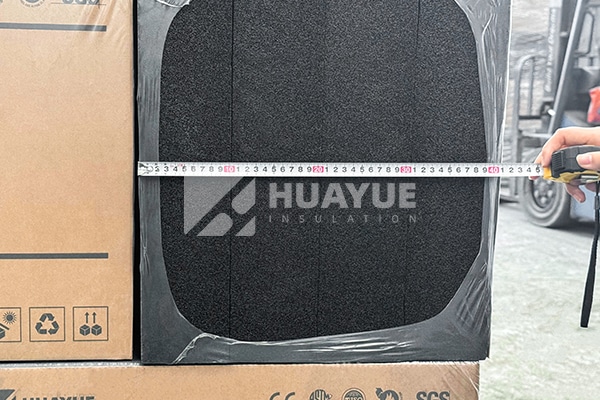
The distinction between a manufacturer and a trader is important for a technical purchase. A trader may be able to provide a catalogue and arrange shipment, but may not control the glass formulation, foaming process, annealing, block cutting, inspection, or batch records. A manufacturer should be able to identify what it makes, where the product is made, which documents apply to the named product, and how deviations or damage are handled.
For a manufacturer screening process, ask for evidence in a fixed order:
- Product identity: the commercial name, model, material family, block dimensions, and intended application.
- Material and process description: the glass composition or raw-material description, foaming or cellulation route, annealing or cooling controls, and finishing process where relevant.
- Quality evidence: current product data, inspection procedures, test reports, and the sample or product scope to which each result applies.
- Application boundary: whether the block is for building insulation, mechanical insulation, tank or pipe work, or a borosilicate industrial lining system.
- Supply and packaging: available forms, packing method, handling precautions, current commercial status, and the documents supplied with an order.
HUAYUE’s BoroCell® CL200 product page identifies the block as a closed-cell foamed borosilicate cellular glass block for FGD chimney linings. It describes use with flue-gas handling equipment such as ductwork, chimneys, stacks, flues, and FGD absorber inlets or outlets, typically over steel, concrete, brick, or FRP substrates. The same page identifies a block module and product-specific data, but those values apply to CL200 and should not be transferred to every cellular glass block.
This is the right way to read a manufacturer claim: use the company’s product page to identify the offer, then match the current datasheet, test scope, installation method, and project conditions before approval. Certificates, standards, capacity, lead time, MOQ, warranty, and customization should be verified for the exact order rather than assumed from a generic “cellular glass manufacturer” label.
What Is Cellular Glass Made Of?
The material is glass first; the cellular structure is created during processing rather than by spinning the glass into fibers.
Cellular glass is made from a glass composition that is foamed or cellulated under controlled conditions, then annealed and formed into a rigid body with sealed glass cells. The exact composition, foaming agent, density, and process parameters vary by product and manufacturer.
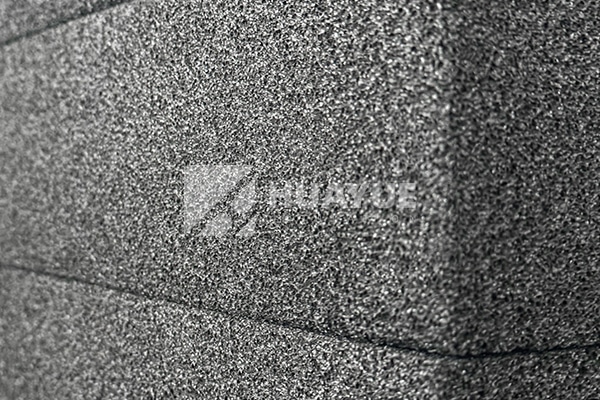
At category level, ASTM C552 provides the clearest short description: the glass composition is foamed or cellulated under molten conditions, annealed, and set into a rigid non-combustible material with hermetically sealed cells. In plain language, the process turns a glass body into a matrix of small sealed cells. Those cells are the reason the finished material behaves differently from ordinary solid glass and from fibrous glass wool.
The manufacturing sequence can be understood as four linked stages:
- Glass preparation: the manufacturer selects and prepares the glass composition for the named product. This may involve new raw glass, cullet, or other defined inputs, but the acceptable recipe is product-specific.
- Cell formation: the glass is foamed or cellulated under heat so gas-filled cells form inside the glass matrix. The foaming route and additives influence cell size, density, and final properties.
- Annealing and setting: the material is cooled in a controlled way so the rigid cellular body can be handled and processed. Cooling conditions matter because rapid temperature change can introduce defects or stress.
- Forming and finishing: the cellular body is trimmed into blocks, boards, pipe shapes, fittings, or other forms. A block intended for an industrial lining is not automatically interchangeable with a board intended for a building envelope.
For example, the BoroCell® CL200 product description identifies borosilicate glass as the raw material and describes a black foamed block. Its application is a borosilicate block lining system, not a generic promise that every cellular-glass product has the same chemistry or use range. A buyer asking “what is it made of?” should therefore request the composition and product scope for the exact model.
The composition question is also where recycled-glass language needs care. Some cellular-glass products are made with recycled glass, while others use a defined new-glass or borosilicate formulation. Neither statement should be generalized across the industry. What matters is the named product’s approved material description, process controls, and resulting test evidence.
Is Cellular Glass the Same as Fiberglass?
Both products are glass-based, but their structures and manufacturing routes lead to different forms and selection requirements.
No. Cellular glass is a rigid, closed-cell glass material; fiberglass is a fibrous insulation made by forming molten glass into fine fibers. They are different material categories and should not be substituted by name alone.
The National Insulation Association separates cellular and fibrous insulation by structure. Cellular insulation is built from individual cells that may be sealed from one another. Fibrous insulation uses small-diameter fibers to divide air space and may include binders, facings, or coatings. In the market, fiberglass is also called fibrous glass or glass wool.
| Selection factor | Cellular glass block | Fiberglass / glass wool |
|---|---|---|
| Basic structure | Rigid body with sealed glass cells | Network of fine glass fibers |
| Typical forms | Blocks, boards, pipe sections, and fabricated shapes | Batts, blankets, rolls, boards, and pipe products |
| Moisture question | Confirm cell structure, joints, seals, and system detailing | Confirm facing, wetting exposure, drying, and vapor-control details |
| Mechanical question | Confirm block strength, support, cutting, and joint design | Confirm compression, support, sag control, and protection |
| Fire question | Confirm the named cellular-glass product and complete assembly | Confirm the named fiberglass product, binder, facing, and assembly |
| Best use logic | Rigid, moisture-exposed, chemically demanding, or mechanically specific applications may favor it | Flexible cavities and applications prioritizing easy handling may favor it |
The comparison is not a universal “which is better” contest. Cellular glass may be the better fit when the project needs a rigid inorganic material with a closed-cell moisture barrier and a defined block or fabricated form. Fiberglass may be more practical where a flexible or semi-rigid fibrous product fits the cavity, support arrangement, acoustic objective, or installation method. The answer changes with temperature, humidity, load, geometry, fire requirements, protective layers, and cost.
For industrial procurement, compare equivalent evidence rather than marketing adjectives. Put the exact product name, form, thickness, density or grade where relevant, test method, operating condition, and assembly scope in the comparison. Also ask how the material is protected at joints, penetrations, terminations, supports, and transitions. A closed-cell core can reduce moisture movement through the material, but it cannot correct an unsuitable sealant, damaged block, open joint, or poorly designed system.
If you are shortlisting a cellular glass block manufacturer, start with the application and approximate operating condition. The manufacturer can then identify the relevant block form and document set; dimensions, quantity, destination, packaging, and certification requirements can be confirmed progressively.
Conclusion
Foam glass and cellular glass usually name the same material family; choose the manufacturer by product identity, block form, process evidence, and application fit—not by the keyword alone.