
Pipe insulation failure leads to energy loss and safety risks. Harsh chemical plant conditions demand materials with precise thermal, fire, and mechanical specs. Wrong choices increase costs and downtime.
A cellular glass pipe cover provides λ = 0.038–0.045 W/m·K (EN 12667), handles –268°C to +430°C, meets EN 13167, and achieves Euroclass A1 fire rating.

Pipe insulation in chemical plants must handle thermal cycling, chemical exposure, and mechanical stress. Choosing the right solution prevents corrosion under insulation (CUI) and ensures consistent λ-value in service.
What is cellular glass pipe insulation?
Failure in pipe insulation often results from moisture ingress or insufficient fire protection. Engineers need a non-combustible, closed-cell material that resists both thermal shock and chemical attack.
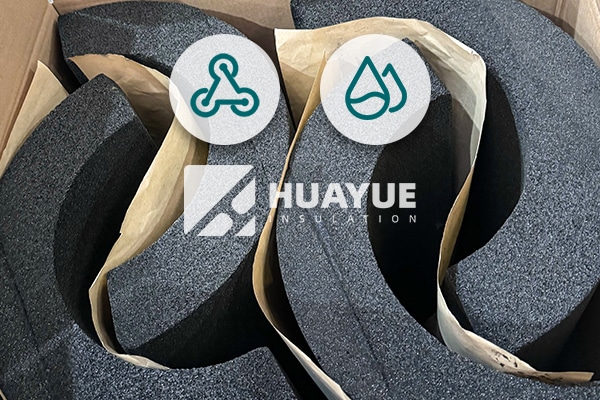
A cellular glass pipe cover is a rigid, closed-cell insulation with λ = 0.038–0.045 W/m·K, density 105–130 kg/m³, compressive strength ≥ 0.7 MPa, Euroclass A1.
Technical Structure
Cellular glass is made from crushed glass foamed at high temperature. The result is a homogenous cell structure with zero capillarity. This prevents water ingress and delivers stable insulation performance over decades.
Key Specifications
| Property | Value | Test Standard |
|---|---|---|
| Thermal Conductivity | 0.038–0.045 W/m·K (at 10°C) | EN 12667 |
| Operating Temp. | –268°C to +430°C | EN 14706 |
| Density | 105–130 kg/m³ | EN 1602 |
| Compressive Strength | ≥ 0.7 MPa | EN 826 |
| Water Absorption | < 0.2 vol% | EN 1609 |
| Fire Classification | Euroclass A1 (non-combustible) | EN 13501-1 |
| CE Marking | Yes | EN 13167 |
Typical Applications
- Steam, condensate, and chemical process lines
- LNG and cryogenic pipelines
- Outdoor or buried pipelines where water ingress is critical
Our cellular glass pipe cover is factory-grooved for pipe diameters DN15–DN600, with thickness options 40–100 mm. All batches are tested for λ-value and compressive strength before shipment.
Is cellular glass insulation expensive?
Budget overruns happen if insulation fails early or requires frequent maintenance. Upfront cost is higher than some materials, but long-term performance can lower total ownership costs.
Cellular glass pipe cover costs €75–€110/m² (50 mm thick, DN100), but offers 25+ years service life, no CUI risk, and minimal maintenance.
Cost Breakdown and Value
Initial Material Cost
Cellular glass is more costly than mineral wool or foam plastics. The raw material and foaming process are energy-intensive, and the material is heavier.
Total Cost of Ownership
- No moisture absorption = no CUI, less repair
- Non-combustible = no fireproofing extras
- High mechanical strength = reduced jacketing/support cost
- No aging or shrinkage = λ-value stays consistent
Sample Cost Comparison (per meter, DN100 pipe, 50 mm thickness)
| Material | Material Cost (€) | Expected Service (years) | Maintenance Cost |
|---|---|---|---|
| Cellular glass pipe cover | 90 | 25+ | Low |
| Mineral wool | 30 | 10–15 | Medium |
| PIR foam | 40 | 10–15 | High (CUI risk) |
All our pricing is based on factory-direct shipments, with CE and EN 13167 compliance. For critical lines, the higher initial cost is offset by reduced risk and maintenance.
Is cellular glass insulation the same as fiberglass?
Confusion between insulation types leads to misapplied materials and premature failures. Fiberglass and cellular glass differ in fire, moisture, and mechanical properties.
Cellular glass pipe cover: λ = 0.038–0.045 W/m·K, Euroclass A1, 0% water absorption. Fiberglass: λ = 0.032–0.040 W/m·K, Euroclass A1, 1–2% water absorption.
Material Differences
Structure
- Cellular glass: Closed-cell, rigid, non-fibrous. Made from molten glass.
- Fiberglass: Open, fibrous mat. Made from spun glass fibers.
Performance
- Fire: Both Euroclass A1, but cellular glass stays intact at high fire temperatures.
- Water: Cellular glass is impermeable. Fiberglass can absorb water, reducing λ-value.
- Mechanical: Cellular glass has higher compressive strength and walkability.
Application Suitability
- Cellular glass pipe cover is preferred for underground, outdoor, or CUI-critical lines.
- Fiberglass is common for indoor, dry locations where mechanical abuse is minimal.
Quick Comparison Table
| Property | Cellular Glass Pipe Cover | Fiberglass Pipe Insulation |
|---|---|---|
| λ Value (W/m·K) | 0.038–0.045 | 0.032–0.040 |
| Water Absorption | < 0.2 vol% | 1–2 vol% |
| Fire Class | Euroclass A1 | Euroclass A1 |
| Compressive Strength | ≥ 0.7 MPa | 0.003–0.01 MPa |
| Aging/Shrinkage | None | Slight over time |
We verify all properties in our in-house lab, using EN and DIN methods.
What is good to wrap pipes with?
Using the wrong wrap increases CUI risk or fails under mechanical stress. Chemical plant lines need non-combustible, water-tight, and mechanically strong insulation.
Cellular glass pipe cover is best for process, steam, cryogenic, and buried pipes: λ = 0.038–0.045 W/m·K, –268°C to +430°C, Euroclass A1, density 105–130 kg/m³.
How to Install Cellular Glass Pipe Cover (5 Steps)
- Surface Prep: Clean and dry pipe surface. Remove rust and oil.
- Section Cutting: Cut cellular glass pipe cover to length. Match DN size and thickness.
- Adhesive Application: Apply cellular glass adhesive (furan resin or bitumen) to all joints.
- Installation: Place half-shells on pipe. Stagger joints and ensure tight fit.
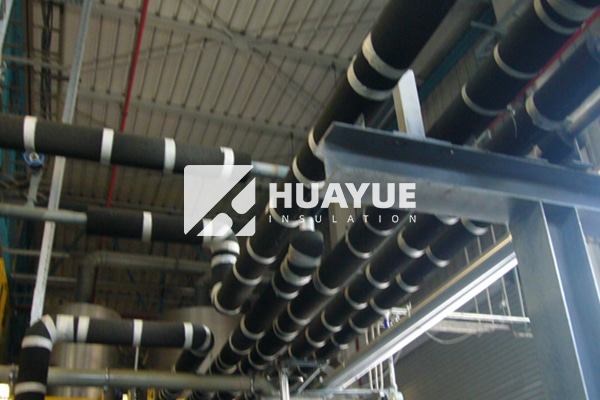
- Jacketing: Seal with aluminum or stainless cladding. Overlap seams to prevent water ingress.
Quality Assurance
We test each batch for compressive strength (EN 826), water absorption (EN 1609), and λ-value (EN 12667). Our covers are CE marked, with full documentation for German site audits.
Conclusion
Cellular glass pipe cover offers λ = 0.038–0.045 W/m·K, Euroclass A1, and full EN 13167 compliance. It is the reliable choice for long-term, maintenance-free industrial pipe insulation.