
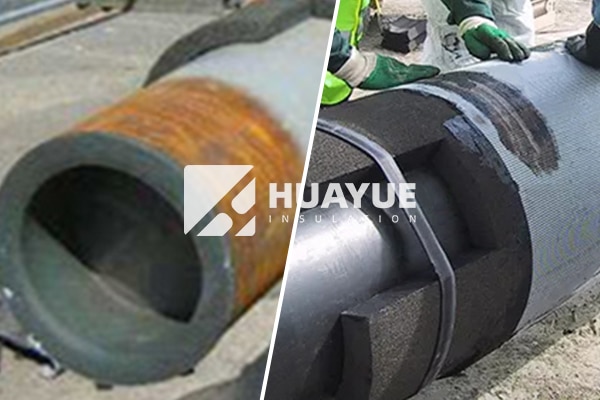
Pipe corrosion under insulation is a real risk. High humidity, chemical exposure, and process temperature changes make it worse. Cellular glass pipe insulation manufacturers must prove performance with precise data.
Cellular glass pipe insulation manufacturers must supply EN 13167-compliant products with λ = 0.038–0.042 W/m·K, operating from –260°C to +430°C, density 105–140 kg/m³, and Euroclass A1 non-combustibility.

Corrosive atmospheres in chemical plants demand insulation that blocks moisture and resists acids. Selecting the right cellular glass pipe insulation manufacturers means focusing on long-term stability, not just initial λ value.
Is FOAM GLASS the same as cellular glass?
Poor terminology confuses specs. Some suppliers use “foam glass” and “cellular glass” interchangeably, but do all offer the same performance?
FOAM GLASS and cellular glass refer to the same closed-cell glass insulation. Leading cellular glass pipe insulation manufacturers certify λ = 0.038–0.042 W/m·K, Euroclass A1, –260°C to +430°C use, and 105–140 kg/m³ density.
Product Equivalence and Specs
Both “foam glass” and “cellular glass” mean a rigid, closed-cell glass insulation formed by foaming crushed glass with a carbonaceous agent. The terminology differs regionally but not in physical structure. What matters for engineers is whether the manufacturer provides full test data and certificates.
Key specifications from cellular glass pipe insulation manufacturers:
| Property | Typical Value | Test Standard |
|---|---|---|
| Thermal conductivity (λ) | 0.038–0.042 W/m·K | EN 12667 |
| Service temperature | –260°C to +430°C | EN 14706 |
| Density | 105–140 kg/m³ | EN 1602 |
| Fire classification | Euroclass A1 (non-combustible) | EN 13501-1 |
| Water absorption | <0.2% by volume | EN 13472 |
The closed-cell structure blocks moisture and vapor. This is critical for pipework at risk of CUI (corrosion under insulation). HUAYUE’s laboratory tests each batch for density and λ value before shipment. We provide complete EN and CE documentation. No ambiguous product naming—just test results and certificates.
Who makes cellulose insulation?
It’s easy to mix up “cellular glass” and “cellulose” insulation, but they are not the same. Engineers need clarity or risk specifying the wrong material.
Cellulose insulation is made from recycled paper and is not offered by cellular glass pipe insulation manufacturers. Only cellular glass provides Euroclass A1, λ = 0.038–0.042 W/m·K, and chemical resistance.
Material Differences and Application
Cellulose insulation is a fibrous product from recycled paper or plant fibers, treated with fire retardants. Its λ value is higher (0.040–0.045 W/m·K), and fire classification is typically Euroclass B or C. It’s used in building envelopes, not in high-temperature or chemical plant pipework.
Cellular glass, by contrast, is inorganic and non-combustible (Euroclass A1). It cannot rot, burn, or absorb water. This makes cellular glass the correct choice for process lines, cryogenic systems, and outdoor pipework in chemical plants.
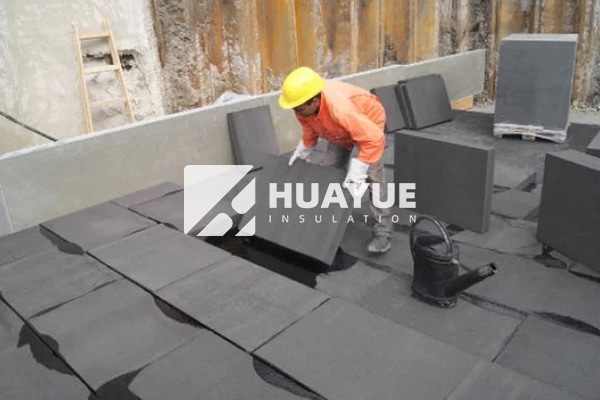
If you see “cellular glass pipe insulation manufacturers” on technical submittals, you are dealing with engineered, closed-cell glass systems—not cellulose. Always check that the λ value, fire rating, and chemical resistance match your application’s risk profile.
Is cellular glass insulation expensive?
Budget overruns matter. Some engineers worry that cellular glass costs more up front. Is this true compared to alternatives, and does the total cost justify the choice?
Cellular glass pipe insulation manufacturers generally quote €120–€180/m³ material cost for standard pipe sections (100 mm thick). This is higher than mineral wool, but lower long-term maintenance offsets initial price.
Cost Analysis
| Insulation Type | Material Cost (€/m³) | Service Temp (°C) | Fire Class | Water Absorption | Life Expectancy (years) |
|---|---|---|---|---|---|
| Cellular Glass | 120–180 | –260 to +430 | Euroclass A1 | <0.2% | >30 |
| Rock Wool | 60–110 | –50 to +650 | A1/A2 | 5–8% | 15–25 |
| PIR/PUR | 90–140 | –180 to +120 | B/C | 2–5% | 10–20 |
Upfront, cellular glass pipe insulation manufacturers are more expensive than rock wool. But, due to closed-cell structure, cellular glass does not require frequent replacement in humid, corrosive, or sub-ambient applications. There is no capillary water absorption, so CUI risk is lower. Fire resistance (Euroclass A1) means no additional fireproofing.
Labor is simplified: cellular glass pipe insulation is supplied in pre-formed sections with straight, precision-cut edges. This reduces site waste and installation time. Over a 20–30 year cycle, total system cost is often lower for cellular glass, especially on stainless or carbon steel lines exposed to the weather or chemicals.
What is the R-value of cellular glass insulation?
Thermal resistance is key for energy savings. Incorrect R-value leads to heat loss and process inefficiency.
Cellular glass pipe insulation manufacturers offer R-values of 2.5–2.6 per 100 mm thickness (R = thickness/λ, λ = 0.038–0.042 W/m·K), per EN 13167.
Calculating and Comparing R-Value
R-value (m²·K/W) = Thickness (m) ÷ λ (W/m·K)
For a standard 100 mm (0.1 m) pipe section:
- At λ = 0.040 W/m·K: R = 0.1 ÷ 0.040 = 2.5 m²·K/W
For 50 mm thickness:
- R = 0.05 ÷ 0.040 = 1.25 m²·K/W
For 150 mm thickness:
- R = 0.15 ÷ 0.040 = 3.75 m²·K/W
R-value is linear based on thickness. Cellular glass pipe insulation manufacturers provide thickness increments from 30 mm to 150 mm. All test data is per EN 12667, measured at mean temperature 10°C.
Because the material is closed-cell, field performance matches lab data. No λ drift over time, even in sub-ambient or humid conditions. This is critical for process stability and energy management.
Who makes FOAM GLASS insulation?
Specifying the right source matters. Not all suppliers meet European standards or provide traceable QA.
Major cellular glass pipe insulation manufacturers include FOAMGLAS®, HUAYUE, and Pittsburgh Corning. All must provide CE-marked products, EN 13167 test data, and batch traceability.
Manufacturer Considerations
When selecting cellular glass pipe insulation manufacturers, verify:
- CE marking and DoP (Declaration of Performance) for EN 13167
- λ value, density, and compressive strength tested per batch
- Factory production control with ISO 9001 or equivalent
- Documentation for Euroclass A1 fire rating (EN 13501-1)
- Independent third-party test reports (TÜV, SGS, etc.)
HUAYUE provides:
- λ = 0.038–0.042 W/m·K (EN 12667)
- Density 110–135 kg/m³ (EN 1602)
- Compressive strength ≥ 0.7 MPa (EN 826)
- Water absorption <0.2% (EN 13472)
- Euroclass A1 (EN 13501-1)
- CE marking and full DoP on request
Batch samples are tested in our factory laboratory for λ, density, and compressive strength. We supply traceability for every shipment. Our pipe sections and elbows are cut to EN tolerance, minimizing site adjustment.
Leading cellular glass pipe insulation manufacturers must provide documented performance, not just claims. Always ask for the latest CE certificate and batch test reports.
Conclusion
Cellular glass pipe insulation manufacturers supply EN 13167-certified systems with λ = 0.038–0.042 W/m·K, Euroclass A1, and <0.2% water absorption. Specify by test data, not by vague terms.