

Specifying the wrong insulation can mean failed fire inspections or missed U-value targets. Moisture ingress and complex installation add risk. You need insulation that delivers tested performance, not surprises.
Insulation roof board cellular glass achieves EN 13501-1 Euroclass A1 (non-combustible), λ = 0.038 W/m·K, and withstands -268°C to +430°C. Typical density: 120 kg/m³. Ideal for demanding roof and envelope compliance.

Roof assemblies face unique technical challenges: strict U-value demands, wind load, and fire resistance—especially for ventilated or green roofs in commercial projects. Let’s detail how insulation roof board cellular glass addresses these requirements.
Is FOAM GLASS thermal insulation made of cellular glass viable for high-performance roofs?
Procurement often stalls when insulation can’t meet both non-combustibility and low U-value. Many mineral wool products add weight or are tricky to detail at parapets. Cellular glass offers a robust, tested alternative.
Insulation roof board cellular glass is made from 100% glass, expanded to a closed-cell structure. EN 13501-1 Euroclass A1, λ = 0.038 W/m·K, compressive strength ≥ 600 kPa.
Cellular glass, sometimes branded as FOAM GLASS, is produced by melting recycled glass and adding a foaming agent. The result is a rigid, lightweight insulation board with millions of hermetically sealed cells. This structure means:
- Zero capillary absorption: no moisture creep, even under high humidity or ponded water.
- Inorganic, so it will not rot, support mold, or degrade over decades.
- Mechanical strength: compressive stress ≥ 600 kPa (tested per EN 826), supporting green roof ballast or walkable surfaces.
- No off-gassing or VOCs—an advantage for LEED and BREEAM credits.
Key specifications:
- Standard thickness range: 50–180 mm (custom up to 180 mm)
- Density: 120–145 kg/m³
- R-value per 50 mm: 1.32 m²·K/W
- Weight per m² at 100 mm: ≈12 kg
Fire: Euroclass A1 (EN 13501-1), will not produce smoke or flaming droplets.
Thermal transmittance (U-value) calculation:
For U = 0.20 W/m²·K (roof, per RE2020 or EnEV), use 190 mm thickness.
Summary: For high-performance roofs, insulation roof board cellular glass delivers both fire safety and stable thermal values over the life of the building.
Is cellular glass eco-insulation suitable for floor slabs, cellars, and roofs?
Finding insulation for below-grade or wet areas often involves trade-offs: XPS can absorb water over time; mineral wool may require vapor barriers. Cellular glass solves both durability and environmental concerns.
Insulation roof board cellular glass is closed-cell, 0% water absorption, non-degradable, and supports LEED/BREEAM points. λ = 0.038 W/m·K.
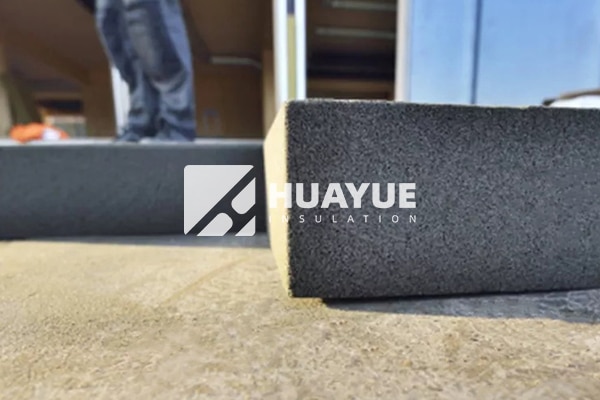
Durability and Moisture Resistance
Cellular glass’s closed-cell structure blocks water vapor and liquid, making it suitable for:
- Under-slab insulation (direct contact with soil or groundwater)
- Perimeter insulation for basement walls, avoiding thermal bridges
- Roof decks with inverted waterproofing (protected membrane roofs)
No organic binders mean no risk of biological attack, even after decades. Factory tests per EN 12087 show <0.1% water absorption by volume after full immersion.
Environmental Credentials
Cellular glass is produced primarily from recycled glass, often >60% by weight.
- No blowing agents, no HFCs or HCFCs
- Inorganic, fully inert—no harmful leaching
- Cradle to Cradle and Declare labels available by grade
- Contributes to LEED MRc2, MRc4, and BREEAM Mat 03, Hea 02 points
Performance Table
| Application | Typical Thickness (mm) | U-value (W/m²·K) | Load Class (EN 826) |
|---|---|---|---|
| Floor slab (U=0.25) | 150 | 0.25 | ≥600 kPa |
| Cellar wall (U=0.27) | 120 | 0.27 | ≥600 kPa |
| Inverted roof (U=0.20) | 190 | 0.20 | ≥600 kPa |
For all these, insulation roof board cellular glass maintains its properties in wet or aggressive environments, avoiding hidden failures.
What does a FOAM GLASS Commercial Roofing Design Guide recommend?
Many roof failures stem from poor insulation detailing—thermal bridging, incompatible adhesives, or membrane blistering. Precise system guidance is essential to pass inspection and avoid callbacks.
For a ventilated flat roof with U=0.20 W/m²·K, use insulation roof board cellular glass at 190 mm thickness, density 120 kg/m³, fully bonded with bitumen or adhesive.
Step-by-Step System Recommendation
- Vapor control layer: Place over the structural deck (if required by dew point analysis).
- Install insulation roof board cellular glass:
- Lay boards dry, stagger joints.
- Bond with hot bitumen, cold adhesive, or mechanical fixings per project requirement.
- Waterproofing membrane:
- Fully adhered or loose-laid with ballast (inverted roofs).
- Cellular glass is compatible with bitumen, PVC, TPO, and liquid-applied systems.
- Protection/ballast:
- For inverted roofs, place filter fabric and gravel or pavers.
- Edge/penetration detailing:
- Boards are easily cut on site.
- All exposed board edges must be protected or covered by flashing.
Acoustic performance:
- NRC = 0.5 @ 50 mm (per ISO 354)
- For mechanical rooms, multi-layer with gypsum board achieves STC > 50.
Installation speed:
- Boards are rigid, light, and can be laid by two installers; typical rate: 150–200 m²/day (uninterrupted surface).
Labor savings: No need for vapor barrier above boards, no tape or mesh required, reducing installed cost.
What is Cellular Glass Insulation?
Many specifiers need to understand what sets this material apart from mineral or polymeric boards—especially for long-term risk and compliance.
Cellular glass insulation is a rigid, closed-cell board made from foamed, recycled glass. Density 120–145 kg/m³. Fire class A1, λ = 0.038 W/m·K.
How Cellular Glass Is Made
- Raw material: Up to 70% recycled glass cullet
- Foaming: Mixed with carbon agent, melted at 1100°C, then expanded in molds
- Annealing: Slow cooling to relieve thermal stress
- Cutting and finishing: Boards precision-cut to thickness tolerance ±2 mm
Main Properties
- Non-combustible: Will not burn, melt, or emit toxic smoke (EN ISO 1182 test)
- Dimensionally stable: No shrinkage or deformation from -268°C to +430°C
- Chemically inert: Resists acids, rodents, insects, and root penetration
- Zero moisture absorption: EN 12087, 0% by volume after 28 days
Applications:
- Flat and sloped roofs
- Concrete and steel decks
- External wall insulation (ventilated facades)
- Below-grade perimeter and slab insulation
- Acoustic and fire partitions
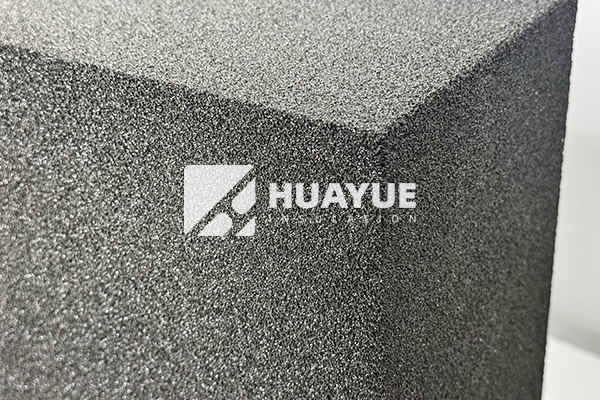
What is the temperature range for cellular glass insulation?
Choosing the wrong insulation for high or low temperature applications can cause premature failure or safety issues. Not all insulations hold up under thermal cycling.
Insulation roof board cellular glass is rated for continuous use from -268°C (cryogenic) up to +430°C, tested per EN 14706/14707.
This range far exceeds most mineral wool or foam plastic insulations, which typically top out at +250°C or degrade below -50°C. In real-world applications:
- Cryogenic tanks or cold stores: No embrittlement, no loss of R-value
- Roofs with solar exposure: No melting, sagging, or shrinkage at +80°C surface temp
- Mechanical or process rooms: Fire-resistance maintained even under hot pipe leaks
In our factory, every batch is tested in a muffle furnace and cryo chamber. No dimensional change is permitted per EN 822. This is critical for European projects requiring multi-decade service life and minimal maintenance.
Conclusion
Insulation roof board cellular glass offers Euroclass A1 fire safety, 0.038 W/m·K thermal conductivity, and reliable U-value performance even in extreme moisture and temperature conditions. Specify 190 mm at 120 kg/m³ for U=0.20 W/m²·K.