
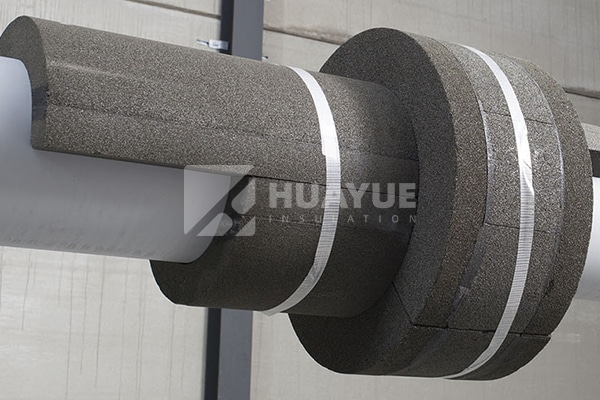
Foam glass material, also called cellular glass, is rigid insulation made by foaming glass into a cellular structure. Its value depends on cell structure, product form, and project conditions.
Foam glass is a lightweight, inorganic glass material with gas-filled cells. Closed-cell grades are used where insulation must also resist moisture and carry compressive loads; the selected product and assembly still require verification.
This guide explains what foam glass is, how it is produced, which properties matter, where different forms are used, and why “waterproof” should be assessed at both material and system level.
What Is Foam Glass Material?
At its core, foam glass is not a plastic foam with a glass filler; it is a glass-based cellular solid formed during controlled foaming and cooling.
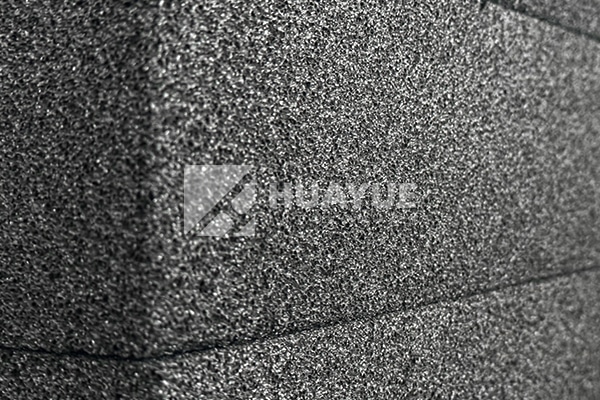
Foam glass material is a rigid porous glass product. Its walls are made from a glass phase, while the cells contain gas; whether those cells are mostly closed or open determines how the material behaves.
The terms foam glass, foamed glass, and cellular glass are often used for closely related materials. In insulation specifications, “cellular glass” commonly describes a rigid glass product with sealed cells, while the broader term “foam glass” can also include open-cell, acoustic, decorative, or granular forms. That distinction matters because a material name alone does not establish water resistance, fire classification, compressive strength, or thermal conductivity.
The cellular structure is the reason a solid glass feedstock can become a lightweight insulation material. Gas-filled pores interrupt heat flow, while the glass cell walls provide rigidity. A closed-cell product can combine insulation with resistance to liquid-water uptake and vapor movement. An open-cell product may be selected for a different purpose, such as sound absorption or drainage, and should not automatically be treated as equivalent to closed-cell thermal insulation.
For procurement and specification work, start by identifying the material category, then the product form, grade, test method, and intended assembly. ASTM C552 is a recognized specification for cellular glass thermal insulation, while ASTM C1639 addresses fabrication of cellular glass pipe and tubing insulation. These standards help define what should be checked; they do not, by themselves, prove that every product complies or that an installed system will perform as expected.
How Is Foam Glass Made?
Manufacturing converts a glass feedstock and foaming additive into a rigid body whose pore size, density, and connectivity shape its use.
Foam glass is generally made by mixing finely prepared glass with a foaming agent, heating it until gas forms in the softened glass, then cooling and annealing the cellular body.
The process normally begins with selected glass that is cleaned, sized, and ground to create a consistent feedstock. Depending on the formulation and product route, the feedstock may include recycled glass or other glass sources. A foaming agent is then blended into the powder. During heating, the glass softens and the additive releases or promotes gas formation. The gas expands inside the viscous glass, creating pores. Controlled cooling and annealing help stabilize the cellular body before it is cut, fabricated, crushed, or screened into the required form.
Process control is central to material performance. Heating rate, peak temperature, hold time, glass chemistry, particle size, additive content, and cooling conditions can influence pore size, density, cell connectivity, strength, and thermal conductivity. Too much open porosity may increase water or vapor pathways; too little porosity may increase weight and reduce the insulation benefit. Uneven cells can also create local differences in strength or cutting behavior.
This is why two products described as foam glass may not have the same specification. A board, a prefabricated pipe section, a fitting, and a granular aggregate can use related material principles while being designed for different loads, geometries, and installation methods. A responsible technical submittal should identify the product form, declared properties, test method, and conditions behind the values—not only the general name “foam glass.”
What Are the Advantages of Foam Glass?
Foam glass is considered when a project needs several material functions in one rigid, inorganic insulation layer.
The main advantages of a suitable closed-cell foam glass grade are thermal insulation, moisture resistance, dimensional stability, incombustibility, and compressive capability. None is universal: the product grade and complete system control the result.
Its thermal performance comes from the gas-filled cells, but the declared conductivity depends on the product structure, density, mean temperature, moisture condition, and test method. Use the value for the actual grade and temperature range rather than applying a generic material number to every form.
Moisture resistance is another reason engineers consider cellular glass for exposed, buried, or cold-service environments. Sealed cells can limit liquid-water uptake and vapor transmission through the material. The joints, cut edges, sealants, facings, penetrations, and external weather barrier still need a design. A moisture-resistant insulation material cannot compensate for open joints or poor drainage.
Because the matrix is glass and inorganic, foam glass does not behave like an organic polymer when exposed to fire. The relevant fire result is still the tested classification of the selected product under the required standard. Similarly, compressive capability is product-specific. A high-load board or block may be suitable for a designed load-bearing location, while a lower-strength insulation form may not be. Point loads, support spacing, bearing area, safety factors, and thermal movement must be checked as part of the assembly.
The main limitations are equally important. Foam glass is rigid and can be brittle, so impact, edge damage, cutting, handling, and joint detailing require care. It is not automatically the most economical choice for every wall, roof, pipe, or tank. Select it when its combination of moisture control, rigidity, temperature resistance, and load response solves a defined project risk.
What Is Foam Glass Used For?
The material is used across building and industrial work, but the correct form depends on geometry, temperature, load, moisture exposure, and installation method.
Foam glass is used in building envelopes, below-grade and under-slab assemblies, cold and hot industrial piping, tanks, vessels, tank bases, and lightweight granular fill—when the chosen form matches the project conditions.

Common forms include rigid boards or panels, prefabricated pipe or tube sections, fabricated fittings, blocks, and granular foam glass. These forms are not interchangeable:
- Boards and panels can be considered for roofs, façades, walls, floors, foundations, and other flat or lightly shaped assemblies. The design must account for substrate, distributed and point loads, joints, finishes, and the complete thermal and moisture-control layers.
- Pipe and tube sections are shaped for straight piping and related equipment. Joint arrangement, vapor-retarder continuity, supports, cladding, thermal movement, and the operating condition influence the installed result. ASTM C1639 specifically highlights fabrication and joint considerations for cellular glass pipe and tubing insulation.
- Fittings and fabricated pieces help accommodate elbows, heads, reducers, supports, and equipment geometries. Their suitability depends on the drawing, tolerances, attachment method, and the surrounding insulation system.
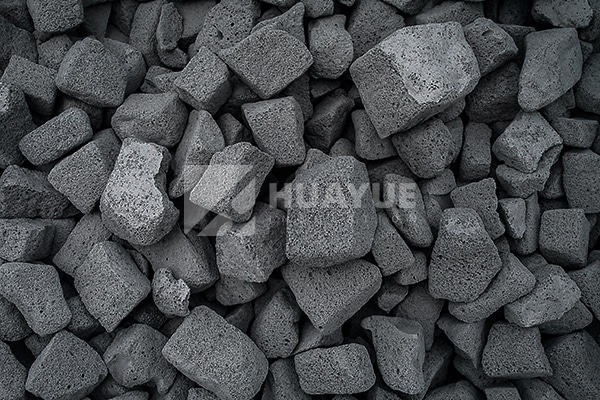
- Granular or gravel forms can serve as lightweight fill, drainage or insulation layers in selected below-grade, under-slab, roof, road, landscaping, or pipeline applications. Their bulk density, grading, compaction, drainage, and separation layers must be reviewed for the project.
For product-form and industrial-insulation context, see BoroCell’s cellular glass insulation product route. For building-envelope work, use the BoroCell building-envelope route. These pages address application and product selection; this article defines the material family so buyers can ask for the right evidence.
Is Foam Glass Waterproof?
“Waterproof” is a useful search term, but a technically responsible answer must separate the cellular material from the complete installed insulation system.
Closed-cell foam glass is designed to resist liquid-water uptake and vapor movement, but “waterproof” describes the material’s cellular structure, not an entire installed system. Joints, facings, sealants, drainage, and workmanship still matter.
The glass cell walls in a closed-cell product can prevent water from moving through the cells in the way it can through a fibrous or openly porous material. This is valuable where wet soil, rain, condensation, groundwater, or cold-service vapor ingress could reduce insulation performance or increase corrosion risk. It does not mean that every foam glass product has the same water absorption, vapor resistance, or immersion behavior. Those properties must be confirmed for the selected grade and test method.
The installed system has additional pathways for moisture. Water can enter through unsealed joints, damaged edges, penetrations, cracks, failed coatings, open cladding laps, or poor drainage. On piping and equipment, the vapor-retarder system and support details are particularly important. On below-grade work, the design should consider groundwater, hydrostatic pressure, drainage, soil conditions, protection layers, and construction sequencing.
Foam glass can support a corrosion-under-insulation risk-management strategy, but no insulation material alone eliminates CUI. Coating condition, water management, joint sealing, inspection, maintenance, and the operating environment remain part of the engineering decision. When a project specification uses the word “waterproof,” convert it into measurable requirements: water absorption, vapor transmission, tested assembly, exposure condition, joint treatment, and acceptance criteria.
Conclusion
Foam glass material is a family of cellular glass products; match structure, form, and verified data to the application. Share your application and operating condition for an initial review.