

Industrial pipe systems need insulation that matches their temperature, geometry, moisture exposure, and installation method.
Foam glass pipe insulation is a prefabricated, rigid, closed-cell cellular-glass section made by foaming glass and fabricating it into pipe shells or segments. Its final selection depends on diameter, thickness, operating condition, and system details.

The four questions below explain what the product is, how to read its R-value, why pricing is quote-based, and what the material is made of.
What Is Foam Glass Pipe Insulation?
The product name describes both the material family and the pipe-specific form.
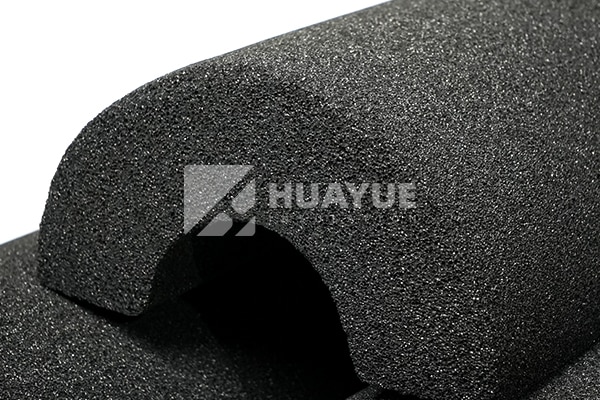
Foam glass pipe insulation is cellular glass shaped into pre-formed pipe sections, usually half-shells or segments that fit around a straight pipe. “Foam glass” and “cellular glass” are commonly used for the same rigid, glass-based insulation category.
Foam glass is different from fiberglass. Fiberglass or glass wool is a fibrous insulation, while foam glass has a rigid body made from sealed glass cells. That structural difference affects how the material is cut, supported, joined, protected, and compared with alternatives. A pipe section is not simply a board with a different label: its inside diameter, length, thickness, joint arrangement, and fit around the pipe all matter.
For straight pipework, the practical product route is a prefabricated shell or segment. For elbows, tees, reducers, flanges, ends, and equipment transitions, the system may need matching fittings or fabricated pieces. A published BoroCell CGPN120 cellular glass pipe page describes prefabricated half shells for straight pipes and lists related pipe fittings for connection details. The product form should therefore be selected from the piping layout, not from insulation thickness alone.
Foam glass pipe insulation is considered for hot, chilled, cryogenic, commercial, and industrial pipework when the selected grade and the complete design fit the service. The relevant checks normally include:
- pipe outside diameter or nominal size;
- required insulation thickness or thermal target;
- minimum and maximum operating temperature;
- temperature cycling and heat-tracing requirements;
- indoor, outdoor, buried, humid, or chemically exposed location;
- joint sealing, vapor control, jacketing, supports, and fittings; and
- quantity, packaging, delivery route, and project documents.
The closed-cell material can be an attractive starting point for moisture-sensitive or mechanically demanding systems, but no pipe insulation should be specified from a generic material name alone. The insulation, joints, adhesive or sealant, outer protection, pipe supports, and penetrations must be considered as one installation.
What Is the R-Value of Foam Glass?
R-value is not one fixed number for every foam glass product or every pipe installation.
The R-value depends on the named product, thickness, temperature, test method, and geometry. For example, BoroCell’s public CGPN120 page lists thermal conductivity of 0.043 W/(m·K) at 10°C, which is approximately R-3.3 per inch for a flat material-layer conversion at that condition.
The basic material calculation is:
R = thickness ÷ thermal conductivity
Using the published CGPN120 average value as an example, 25.4 mm divided by 0.043 W/(m·K) gives about 0.591 m²·K/W. Converting that SI resistance to the customary U.S. insulation unit gives approximately R-3.3 per inch. This is a transparent material-layer calculation, not a universal rating for all foam glass and not a guarantee for an installed pipe system.
For pipework, geometry adds an important qualification. Flat-layer R-value is convenient for a quick comparison, but heat loss through a cylindrical pipe is affected by the pipe radius, insulation radius, surface temperatures, ambient conditions, supports, fittings, and outer protection. A project heat-loss calculation should use the appropriate cylindrical-pipe method and the selected product’s thermal conductivity at the relevant mean temperature.
When comparing data, keep these fields together:
| Field | Why it matters | Buyer check |
|---|---|---|
| Product and grade | Different grades can have different conductivity and strength | Confirm the exact pipe or board designation |
| Thermal conductivity | R-value is calculated from conductivity and thickness | Compare values at the same stated temperature and method |
| Thickness and layers | Resistance changes with the material thickness and arrangement | Confirm single-layer or multi-layer construction |
| Pipe geometry | Cylindrical heat flow is not identical to a flat panel | Use pipe size, insulation OD, and design temperatures |
| System details | Joints, supports, fittings, and jacketing affect heat flow | Include the complete installation in the calculation |
The most useful number in an RFQ is therefore not just “R-value.” Ask for the current conductivity or thermal-resistance data for the proposed grade, the reference temperature, the test method, and the calculation basis used for the pipe system.
How Much Is Foam Glass Insulation?
Foam glass insulation does not have one responsible universal price per meter, square meter, or cubic meter.
The price is quote-based because pipe diameter, insulation thickness, product grade, fittings, quantity, packaging, finish, destination, and delivery terms can change the cost substantially. BoroCell’s CGPN120 product page directs buyers to request a quote rather than publishing one fixed pipe price.
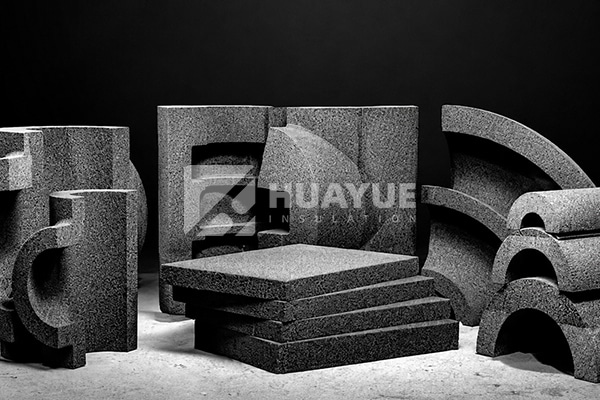
A pipe-section quote is normally more specific than a board-price comparison. The same insulation thickness can require very different material volumes for a small and large pipe. Large diameters may also need different shells, multiple layers, special supports, or additional handling. Elbows, tees, reducers, valve boxes, end caps, and vessel connections add fabrication work that should not be hidden inside a simple “price per meter.”
The material quantity can be estimated from the annular cross-section. For a straight pipe, the insulation volume per unit length is approximately:
Volume per metre = π ÷ 4 × [(pipe outside diameter + 2 × insulation thickness)² − pipe outside diameter²]
This formula is useful for checking whether a quotation is being compared on a similar basis. It does not replace the supplier’s take-off because real orders may include cutting loss, joints, fittings, end details, packaging, and minimum order conditions. Buyers should also clarify whether the price covers plain pipe sections only or includes coating, jacketing, adhesive, bands, fittings, documentation, and delivery.
For a useful quotation, send the smallest practical information set first:
- pipe outside diameter or pipe schedule;
- required insulation thickness or target heat-loss/temperature-maintenance result;
- operating temperature range and ambient condition;
- straight-pipe length plus a count of elbows, tees, valves, flanges, and ends; and
- destination, quantity, packing preference, and required documents.
Price should be compared together with the technical basis. A lower material price may exclude fittings, protective layers, packaging, or the documentation needed for approval. A higher quote may reflect a higher-strength grade, more complex fabrication, or a different delivery scope. Until those inclusions are aligned, a single headline price is not a meaningful procurement comparison.
What Is Foam Glass Made Of?
Foam glass is made by converting a glass composition into a rigid cellular structure.
At category level, foam glass is made from glass and a foaming agent or gas-forming additive. The mixture is heated until the glass forms a cellular mass, then controlled cooling or annealing produces a rigid body with sealed cells; the block is later fabricated into pipe sections.
ASTM C552 describes cellular-glass thermal insulation as a glass composition that is foamed or cellulated under molten conditions, annealed, and set into a rigid material with hermetically sealed cells. That explains the relationship between “foam glass,” “cellular glass,” and “closed-cell glass insulation” without treating a brand name as a recipe.
The exact formulation can vary by manufacturer, grade, density target, cell structure, and production route. Public BoroCell material information describes glass powder or glass-based raw material combined with foaming agents and heat treatment. Its published overview also describes a process involving foaming and annealing before blocks are cut into boards, pipe products, and fittings. Those descriptions support the manufacturing principle; they should not be used to assume that every supplier uses the same glass source, additive, or furnace profile.
Manufacturing creates the properties buyers usually associate with cellular glass: a rigid shape, many small sealed cells, and a glass matrix around those cells. The cells help lower heat transfer compared with solid glass, while the rigid body gives the product a different mechanical and handling profile from fibrous insulation. The pipe form is then produced by cutting or fabricating the cellular-glass block into the required inside diameter, wall thickness, length, and fitting geometry.
For technical review, ask the supplier to identify the proposed product form, grade, composition statement where required, thermal data, water or vapor test basis, mechanical data, fire evidence, and installation limitations. “Made of glass” identifies the material family, but it does not by itself establish a product’s R-value, temperature limit, fire classification, chemical suitability, or complete system performance.
Conclusion
Choose foam glass pipe insulation by product grade, pipe geometry, thermal condition, price scope, and verified system details—not by material name alone.