
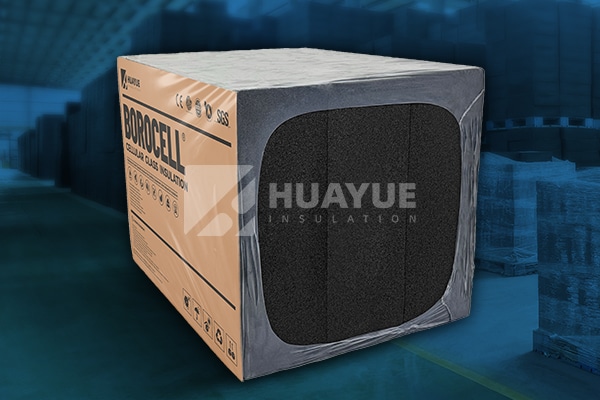
Chemical exposure can damage insulation, increase moisture-related risk, and shorten the life of the protected equipment.
Foam glass is generally chemically durable because its glass matrix is relatively inert and its closed-cell structure limits liquid and vapor ingress. It is not universally resistant: the chemical, concentration, temperature, exposure time, product composition, and complete assembly must be checked together.
This guide explains the chemical-resistance question from a material and procurement perspective, including the substances that need special review and the evidence to request before specifying a product.
Is Foam Glass Chemically Resistant?
The short answer is yes for many common industrial exposures, but “chemical resistant” is not a blanket approval for every reagent or installation.
Closed-cell foam glass is commonly selected for chemically demanding insulation because glass resists many acids, salts, and organic substances, while sealed cells reduce absorption. Resistance still depends on the exact glass composition and exposure conditions.
The chemistry of glass provides the starting point. Technical glass guidance from SCHOTT explains that glass is generally resistant to water, salt solutions, acids, and organic substances, while hydrofluoric acid, strong alkaline solutions, and concentrated phosphoric acid can attack the glass, particularly at higher temperatures. That principle helps explain why cellular glass appears in industrial insulation discussions, but it does not prove the compatibility of every foam-glass product.
The second part of the answer is physical rather than purely chemical. Cellular glass is an expanded-glass insulation with closed-cell pores. ASHRAE describes cellular glass as water- and vapor-tight at the material level, while also distinguishing boards from loose-fill aggregate. A closed structure can limit the routes by which spilled liquid, process vapor, or moisture moves through the insulation. That matters because absorption can create a second problem even when the core material itself is chemically stable.
However, chemical durability is a defined test result, not a marketing adjective. The result depends on the reagent, concentration, temperature, contact time, surface condition, specimen form, and test method. A solid-glass reference, an insulation-board test, a pipe section, a block lining, and a complete insulated system are not automatically interchangeable. The right conclusion is therefore: foam glass is a strong candidate for chemical-resistance applications, subject to a named-product compatibility review.
What Chemicals Can Foam Glass Resist?
Buyers usually need a practical screening answer: which chemical families are normally favorable, and which exposures should stop a generic selection?
Foam glass is often suitable for review with water, salts, many dilute or concentrated acids, hydrocarbons, and organic solvents, but hydrofluoric acid, strong alkalis, hot concentrated phosphoric acid, and mixed or changing exposures require specific evidence.
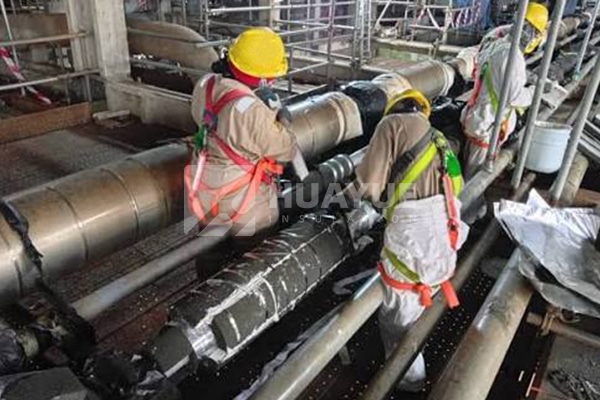
The safest way to read a chemical-resistance table is by exposure condition, not by a simple “resistant / not resistant” label. For example, FOAMGLAS chemical-durability guidance reports strong resistance for its named cellular-glass insulation across a wide range of water, acid, solvent, salt, hydrocarbon, ketone, ether, and ester exposures, while identifying exceptions and test conditions. That source is useful for understanding the category and the questions a buyer should ask; its named-product results must not be transferred to BoroCell or any other manufacturer.
Use the following screening logic for an initial review:
- Water, salt solutions, and many neutral environments: check whether the selected form is closed-cell and whether joints, cut edges, and penetrations are sealed for the intended assembly.
- Mineral and organic acids: confirm the exact acid, concentration, temperature, contact duration, and whether the exposure is liquid, vapor, splash, immersion, or intermittent condensation.
- Hydrocarbons and organic solvents: confirm the glass core and every accessory that may contact the chemical. Sealants, coatings, facings, adhesives, and mastics can have a different compatibility profile from the cellular glass.
- Alkaline solutions: do not infer resistance from acid performance. Glass attack by alkaline solutions can follow a different mechanism and may increase with concentration and temperature.
- Hydrofluoric acid and fluoride-containing service: treat the exposure as a critical compatibility issue. Glass-based materials generally require a specific alternative-material or system review.
- Mixed, alternating, or contaminated streams: identify the full chemical list and the worst credible condition. Alternating acid and alkaline exposures can be more demanding than a single stable reagent.
Temperature and time can change the answer. SCHOTT notes that the intensity of glass attack depends on composition, contact medium, temperature, exposure time, and surface condition. A room-temperature short-contact result should not be presented as proof for continuous hot immersion. If the buyer cannot define the exposure, the supplier should not issue an unqualified chemical-resistance recommendation.
Why Does Closed-Cell Foam Glass Resist Chemical Attack?
Foam glass combines the chemistry of glass with the barrier effect of a cellular structure, which is why it differs from fibrous or absorbent insulation.
The glass matrix provides chemical durability, while sealed cells reduce capillary suction, liquid uptake, and vapor pathways through the insulation. The combination can protect insulation performance, but open joints or incompatible accessories can still become failure paths.
Chemical attack and chemical absorption are related but different. A reagent may react slowly with a material’s solid phase, yet still create risk if it is absorbed into an insulation layer, carried to the metal surface, or retained around joints. In a fibrous or openly porous product, liquid can wick or settle even when the fibers are relatively inert. In a closed-cell material, the cellular walls reduce those internal pathways. This is one reason chemical durability and moisture control are often discussed together.
The benefit is not that every cell is an unbreakable capsule under every condition. The finished product has cut surfaces, joints, edges, supports, sealants, and possible damage from handling. If a block is cracked, a joint is left open, or a coating is incompatible, the installed system can allow a route for liquid or vapor to reach the substrate. Closed-cell structure improves the material’s resistance to absorption; it does not remove the need for system detailing.
The same logic applies to corrosion under insulation. A material that does not readily absorb moisture can reduce one pathway by which water or chemically contaminated liquid reaches metal. It cannot guarantee that corrosion will not occur. Coating condition, drainage, jacketing, joint sealing, temperature cycling, inspection, and the chemistry of the environment remain part of the design. A buyer should therefore separate three questions: Is the core chemically compatible? Can the complete insulation system keep the exposure out? What happens if the system is damaged or the chemical changes?
This distinction also prevents a common error: treating “non-absorbent” as equivalent to “resistant to every chemical.” Water resistance describes transport behavior. Chemical resistance describes interaction with a defined agent under defined conditions. Both are useful, but they answer different engineering questions.
Is Foam Glass Suitable for Corrosive Industrial Insulation?
Industrial buyers consider foam glass where thermal insulation, moisture control, rigidity, and chemical durability need to work together.
Foam glass may suit tanks, vessels, piping, equipment, foundations, and selected lining or process environments when the product form and assembly match the exposure. It should be specified from the chemical profile and system design, not from the phrase “corrosion resistant” alone.

For a flat or lightly shaped surface, a board or block may be easier to coordinate with the substrate and external protection. For piping, a preformed pipe or fabricated fitting can reduce field shaping, but the joints, terminations, supports, and vapor-control details remain important. For industrial flue-gas or chimney lining, the decision is no longer only about insulation: the block, adhesive or membrane, substrate, joint geometry, gas conditions, thermal cycling, and inspection method operate as a system. A product page for BoroCell CL200 should be used for named-product review when the project is specifically a borosilicate block lining; the category guidance in this article is not a substitute for that product evidence.
The application should be described in engineering terms before a quotation is compared. State whether the chemical is an external splash, internal process leak, continuous vapor, condensate, immersion, buried contact, or cleaning exposure. Add the operating temperature range, minimum and maximum concentration, expected duration, frequency of contact, pressure, and whether the chemical can change during shutdown or cleaning. These details determine whether a generic compatibility statement is useful or whether a test report and technical review are required.
The complete system also needs a compatibility check. Adhesives, mastics, primers, coatings, sealants, facings, jacketing, and repair materials may be more vulnerable than the glass core. A chemically durable block can still fail as part of an incompatible assembly. For this reason, the request for quotation should ask for a system-level recommendation and identify which component is covered by each document.
The correct commercial transition is not “foam glass works everywhere.” It is to match the material form and document set to the application. BoroCell’s foam cellular glass insulation route can help route the discussion to boards, pipes, fittings, gravel, or block-based products; the final selection still depends on the named product, chemical profile, and installation design.
What Should Buyers Confirm Before Selecting Chemical Resistant Foam Glass?
A short evidence request can prevent the most common mistake: approving a material-level claim for an entire installation.
Before selection, confirm the exact chemical exposure, product identity, tested form, test conditions, accessory compatibility, and installation boundary. Ask the supplier to identify what is proven, what is recommended, and what still needs project-specific review.
Use this checklist in a technical submittal or RFQ:
- Chemical profile: chemical name, concentration range, temperature, pressure, phase, contact duration, frequency, and any cleaning or upset condition.
- Product identity: manufacturer, product name, grade, physical form, surface condition, and whether the quote is for board, pipe, fitting, gravel, or borosilicate block.
- Evidence scope: test method, specimen size, exposure condition, measured change, report date, and whether the result applies to the quoted product or only to a related sample.
- Accessory compatibility: adhesive, sealant, coating, primer, facing, jacket, repair material, and any membrane that will contact the chemical or the glass.
- System detailing: substrate, joint treatment, penetrations, supports, terminations, drainage, vapor control, protection from impact, and inspection or repair method.
- Change control: what happens if the process chemical, concentration, temperature, cleaning agent, or operating cycle changes after approval.
Do not accept a certificate or standard number as a complete answer without checking its scope. A standard can define a test or product class, but it does not automatically prove compliance for the quoted model or the installed assembly. Similarly, a chemical-resistance table from another manufacturer can show how the category is evaluated, but it is not BoroCell product evidence.
The most useful supplier response separates confirmed data from engineering judgment. Confirmed data should identify the product and conditions. Engineering judgment should explain whether the data reasonably represents the proposed application. Missing data should be named precisely: for example, “compatibility with 20% sodium hydroxide at 90°C for continuous exposure,” rather than a vague request for “chemical resistance information.”
For an initial review, provide the insulated object and the approximate operating condition. Dimensions, quantity, destination, packaging, drawing, and document requirements can follow once the correct product form and compatibility route are clear.
Conclusion
Chemical resistant foam glass is a strong candidate for many demanding insulation applications, but safe selection depends on defined chemistry, tested scope, compatible accessories, and complete system detailing.