
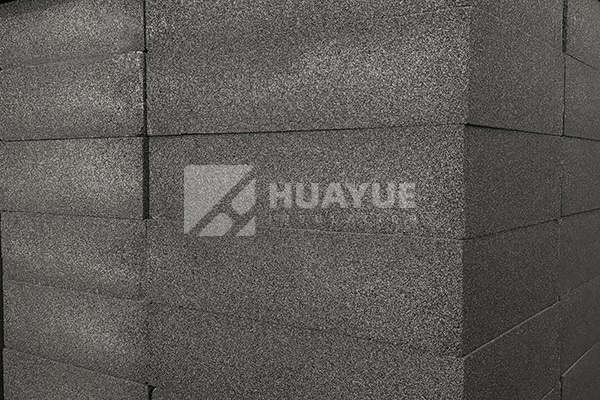
Cellular glass insulation thermal conductivity is not one universal number; read it with the product grade, mean temperature, test method, and thickness in view.
BoroCell’s current product-family table lists average thermal conductivity at 10°C from 0.040 to 0.056 W/(m·K), depending on the named product. Use the grade-specific value—not a generic range—for design comparisons.

The useful question is not simply “What is the λ value?” It is “Which λ value belongs to the product and operating condition I am specifying?” This guide explains how to read the data, compare materials, and prepare a technically useful inquiry.
What Is the K-Value of Cellular Glass Insulation?
The k-value, or λ-value, describes how readily heat moves through a material under stated test conditions.
For cellular glass, a lower thermal-conductivity value means greater resistance to heat flow at the same test conditions. BoroCell’s published values are product-specific: HY500 lists 0.040 W/(m·K) at 10°C.
Thermal conductivity is normally written as λ or k and reported in W/(m·K). It is a material property, so it is not created by thickness. Thickness changes the total thermal resistance of the insulation layer; the conductivity value describes the material used to build that layer. This distinction matters when a quotation says only “foam glass” or “cellular glass” without naming a grade.
The current BoroCell HY500 product page identifies HY500 as ASTM C552 Grade 6 and lists an average thermal conductivity of 0.040 W/(m·K) at 10°C, with a highest single value of 0.042 W/(m·K). The page also identifies ASTM C177/C518 as the testing method. Those details belong beside the number whenever it is used in a technical comparison.
The BoroCell cellular glass product family shows why a single category average can mislead. Its current table lists these average values at 10°C for several board models:
| Named BoroCell board | Average thermal conductivity at 10°C |
|---|---|
| HY500 | 0.040 W/(m·K) |
| HY800 | 0.043 W/(m·K) |
| HY1200 | 0.046 W/(m·K) |
| HY1600 | 0.048 W/(m·K) |
| HY2400 | 0.056 W/(m·K) |
The table is a product-selection starting point, not a complete heat-loss calculation. A finished system can also be affected by thickness, joints, supports, fittings, jacketing, temperature gradients, and installation quality. Compare like with like first, then calculate the complete assembly.
What Does an ASTM C552 Cellular Glass Data Sheet Show?
ASTM C552 is a specification framework; it does not replace the named product data sheet or provide one universal λ value for every cellular-glass product.
An ASTM C552 data sheet should let the reader identify the product grade, form, thermal-conductivity value, test condition, test method, and related physical properties before the material is specified.
The ASTM C552 standard covers the composition, sizes, dimensions, and physical properties of cellular glass thermal insulation. Its listed qualification properties include thermal conductivity, compressive strength, flexural strength, water absorption, water-vapor permeability, hot-surface performance, and surface-burning characteristics. The official scope is for commercial and industrial systems operating between −268°C and 427°C, and it notes that special fabrication or techniques may be required for pipe insulation in the higher part of that range.
For a buyer, the important point is the difference between a standard and a result. “ASTM C552” tells you which specification family or qualification route is being referenced. It does not tell you whether the offered material is Grade 6, Grade 8, Grade 16, or another grade, nor does it tell you whether the quoted λ value was measured at 10°C, 24°C, or a cryogenic mean temperature.
Before comparing two data sheets, check these fields in order:
- Product name, grade, and physical form: board, pipe section, fitting, block, or gravel.
- Thermal-conductivity value: average, declared, design, or highest single value.
- Mean temperature and moisture condition used for the reported value.
- Test method and revision, such as ASTM C177 or ASTM C518 where stated.
- Thickness, density, compressive requirement, and any project-specific assembly limits.
This check prevents a common procurement error: treating a standard designation as though it were the performance value. The product identity and the test condition are the bridge between a specification and a usable design input.
How Does Cellular Glass Thermal Conductivity Change with Temperature?
Temperature is part of the λ value, not an optional footnote.
A value reported at 10°C should be used as a 10°C reference unless the manufacturer provides a temperature-dependent data set or a design value for the actual service condition.
Thermal insulation is exposed to a temperature difference across its thickness. In a simple flat-layer description, the reported mean temperature sits between the warm and cold faces. In real equipment, pipes, tanks, supports, joints, and weather layers create a temperature field rather than a single uniform condition. The farther the application moves from the test condition, the more important product-specific data and system calculations become.
This is especially important for industrial and cryogenic work. A 10°C table is convenient for comparing product grades, but it is not automatically a hot-service or cryogenic design value. The published research on cellular-glass testing for cryogenic standards emphasizes that reliable comparisons require relevant conditions, controlled methods, and clear reporting. It also notes that temperature dependence matters when a material experiences large temperature differences through its thickness.
When the design temperature is not close to the supplier’s reference point, ask for one of the following:
- a λ-versus-mean-temperature table for the named grade;
- a tested or declared value at the project’s relevant mean temperature; or
- a calculation method that identifies how the temperature-dependent data should be used.
Do not “correct” a 10°C value by applying a generic percentage from another insulation material. Different cell structures, densities, forms, test methods, and moisture conditions can produce different results. The correct comparison is the selected cellular-glass product against the alternative product at matching temperatures and comparable reporting conventions.
The same principle applies when converting λ to thermal resistance. The arithmetic may be straightforward, but the input must belong to the selected product and condition. R-value is not a license to detach the conductivity number from its temperature, thickness, and test method.
How Does Cellular Glass Compare With Polyurethane Insulation?
Thermal conductivity is important in a cellular-glass and polyurethane comparison, but the lowest quoted λ does not decide every industrial application.
Compare named products at the same mean temperature, then balance thickness against fire, moisture, mechanical, temperature, and installation requirements.
Polyurethane or polyisocyanurate may be attractive when a project is driven primarily by low initial conductivity and limited thickness. Cellular glass may be considered when the design also requires a rigid inorganic form, closed-cell construction, moisture control, or a product route aligned with demanding industrial conditions. These are selection directions, not universal rankings; the named product and assembly still control the result.
Use the following comparison frame instead of copying the lowest number from each brochure:
| Comparison field | Question to ask |
|---|---|
| Thermal conductivity | Are both values measured or declared at the same mean temperature and comparable moisture condition? |
| Required thickness | What thickness achieves the project target after joints, supports, and clearances are included? |
| Temperature | Is the selected product suitable for the actual hot, ambient, cold, or cycling condition? |
| Fire and system documentation | Does the required classification apply to the product, facing, adhesive, or complete assembly? |
| Moisture and vapor control | What happens if the insulation is exposed to water vapor, liquid water, or a damaged jacket? |
| Mechanical and installation needs | Can the form support the load, fit the geometry, and be protected during installation? |
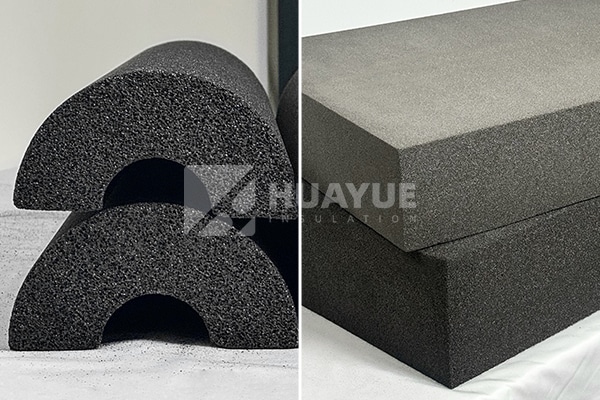
The BoroCell product family includes board, pipe, fitting, and gravel forms. That makes form selection part of the thermal-conductivity discussion: a flat board, a prefabricated pipe section, and a fabricated fitting may be specified from the same material family but still require different geometry, jointing, and system details.
If a supplier compares cellular glass at 10°C with polyurethane at 23°C, or compares a board value with a completed pipe system value, pause before drawing a conclusion. Ask for the product identity, test standard, reference temperature, and whether the value is an average, declared, or design number. A fair comparison may show that the material with the lower initial λ is not the simplest or safest choice for the whole installation.
What Should B2B Buyers Check Before Ordering Cellular Glass Insulation?
The fastest way to improve an insulation quotation is to make the thermal question specific before asking for a price.
Send the application, approximate operating temperature, product form, and required thickness or thermal target; then verify that the returned λ value matches the named grade and test condition.
Use this short technical brief when contacting a supplier or comparing offers:
- Application: pipe, vessel, tank base, building envelope, lining, or another defined location.
- Product form: board, pipe section, fitting, block, or gravel, including the geometry that matters.
- Operating condition: normal temperature, minimum and maximum temperature, and whether cycling occurs.
- Thermal target: required U-value, R-value, heat-loss limit, surface-temperature limit, or insulation thickness.
- Data basis: average or highest single λ, reference mean temperature, test method, and revision.
- System details: joints, supports, adhesive or coating, vapor barrier, jacketing, penetrations, and exposure.
- Documentation: current data sheet, test report, declaration, or project submittal required by the engineer or code.
The request does not need to begin as a full tender package. The application and approximate operating temperature are usually enough to identify the right product family and the next data question. Drawings, quantity, destination, packaging, and document requirements can be added once the material route is clear.
For BoroCell, start with the relevant product form and then open the named product page before copying a thermal-conductivity value into a specification. If the application is unusual, ask the supplier to confirm the grade, test condition, and whether the published value is suitable for design use. That confirmation is more useful than a broad statement that cellular glass has “low conductivity.”
Conclusion
Use cellular glass λ only with its product, temperature, test method, and thickness. For a useful starting point, share the application and approximate operating temperature.