
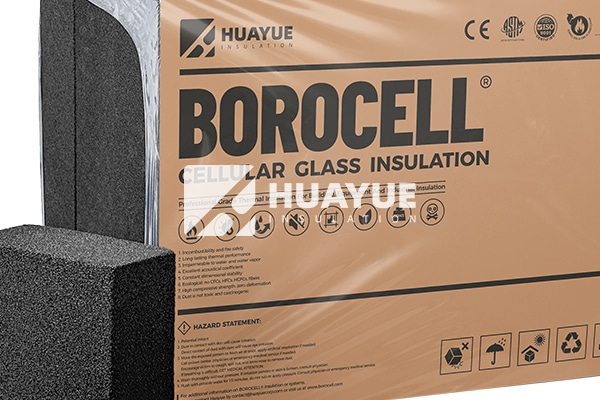
Foam glass load bearing insulation is a critical solution for industrial engineers and specifiers seeking high-performance, durable, and thermally efficient materials for oil and gas or heavy-duty projects.
Foam glass load bearing insulation offers a unique combination of high compressive strength, excellent thermal insulation (R value), and resistance to moisture and chemicals, making it ideal for supporting heavy loads in oil and gas industrial applications.
What is the R value of foam glass?
The R value of foam glass load bearing insulation typically ranges from R-3.0 to R-4.0 per inch (RSI 0.53–0.70 per 25 mm), depending on density and manufacturing process. This value is competitive with other rigid insulation materials, ensuring effective thermal performance even under compressive loads.
Foam glass achieves its insulation properties through a closed-cell structure of tiny glass bubbles, which trap air and limit heat transfer. Unlike fibrous insulations, foam glass does not settle or lose R value over time, even when exposed to vibration or moisture. This makes it well-suited for environments where long-term thermal efficiency is critical, such as pipe supports, tank bases, and load-bearing plinths in oil and gas facilities.

What are the disadvantages of foam glass?
While foam glass load bearing insulation offers many benefits, it also has some limitations compared to other insulation materials:
- Brittleness: Foam glass is rigid and can crack if subjected to sharp impact or improper handling.
- Higher cost: The initial price per unit volume is generally higher than mineral wool or polyisocyanurate insulation.
- Limited flexibility: It cannot conform to irregular shapes or curved surfaces without custom cutting.
- Weight: Foam glass is heavier than some non-load-bearing insulations, which may affect logistics and installation.
Despite these disadvantages, its durability, non-combustibility, and resistance to chemicals often outweigh the drawbacks in demanding industrial settings. Specifiers should ensure proper installation techniques and consider lifecycle costs, which can be favorable due to foam glass’s long service life and minimal maintenance needs.

What is the compressive strength of foam glass?
The compressive strength of foam glass load bearing insulation is a key property for industrial and oil & gas applications. Typical values range from 0.7 to 1.6 MPa (100 to 230 psi), depending on the product’s density and manufacturer specifications.
This strength enables foam glass boards to support significant static and dynamic loads without deformation or loss of insulation performance. For example, in LNG plants and refineries, foam glass is commonly used under heavy equipment, tank bases, or pipe supports where both thermal insulation and structural support are required.
When specifying foam glass, engineers should match the compressive strength rating to the project’s load requirements, including safety factors for long-term creep and potential impact loads. Leading suppliers can provide technical data sheets and guidance for selecting the correct grade.

Load Bearing Foam Glass Insulation Board for Oil Gas Industrial?
Foam glass load bearing insulation is widely used in oil and gas projects for its unique blend of mechanical strength and insulation. Common applications include:
- Tank bases and foundations: Prevents thermal bridging and supports heavy tank loads.
- Pipe supports and shoes: Maintains insulation integrity at pipe hangers and supports.
- Cold storage floors: Provides a continuous insulation layer that can withstand forklift and equipment traffic.
- Cryogenic applications: Suitable for LNG and LPG facilities due to its closed-cell, water-resistant structure.
Selection Guidance Table
| Application Area | Required Compressive Strength | Typical Board Thickness | Key Performance Criteria | Notes |
|---|---|---|---|---|
| Tank Base | ≥ 1.0 MPa (145 psi) | 50–150 mm | High load, moisture barrier | Use vapor barrier |
| Pipe Support | ≥ 0.7 MPa (100 psi) | 25–100 mm | Shape stability, fireproof | Custom cut shapes |
| Cryogenic Floor | ≥ 1.2 MPa (174 psi) | 75–150 mm | Low thermal conductivity | Sealed joints |
| Equipment Plinth | ≥ 1.6 MPa (230 psi) | 50–100 mm | Point load resistance | Specify density |
Procurement Considerations:
- Specifications: Confirm density, compressive strength, and board size.
- Certifications: Check for compliance with relevant fire, thermal, and mechanical standards.
- Supplier Reliability: Choose manufacturers with proven quality control and consistent batch properties.
- Lead Time & Packaging: Ensure packaging protects against breakage and allows for site handling.
- Customization: Specify pre-cut shapes for complex supports to minimize on-site modification.
FAQ
Q1: Can foam glass load bearing insulation be used in outdoor or buried applications?
A1: Yes. Its closed-cell structure makes it water- and vapor-resistant, suitable for direct burial or exposed locations when properly detailed.
Q2: Is foam glass load bearing insulation fire-resistant?
A2: Foam glass is non-combustible and does not emit toxic smoke or gases, making it suitable for fire-critical industrial applications.
Q3: How does foam glass compare to polyurethane or PIR for load-bearing use?
A3: Foam glass offers superior compressive strength, non-combustibility, and chemical resistance, but may be heavier and more expensive.
Q4: What is the typical service temperature range for foam glass load bearing insulation?
A4: It generally operates from -196°C to +430°C, making it ideal for cryogenic and high-temperature processes.
Q5: How is foam glass load bearing insulation installed?
A5: Boards are installed with staggered joints, sealed as needed, and may be bonded or mechanically fixed depending on the application.
Conclusion
Foam glass load bearing insulation delivers reliable strength and thermal performance for oil and gas industrial projects, supporting heavy loads while resisting moisture, fire, and chemicals.