
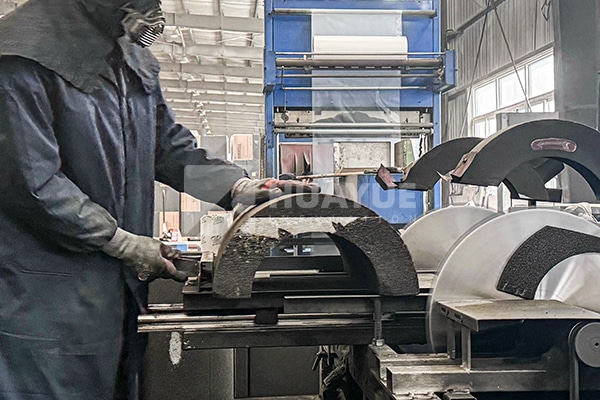
Industrial insulation buyers need more than a low unit price when moisture, temperature cycling, loads, and fabrication details affect the installed system.
The right industrial foam glass supplier connects a verified cellular-glass product to the application, physical form, fabrication method, and technical documents your project requires. HUAYUE’s BoroCell route is one China-based manufacturing option to evaluate.
The questions below follow the main PAA-style search path around industrial foam glass: where it is used, how it is made, how it behaves around water, and how a buyer can evaluate a supplier before requesting a quotation.
What Is Foam Glass Insulation Used For?
Industrial foam glass is not one universal product; the same material family may be supplied as boards, pipe sections, fittings, or aggregate.
Foam glass insulation is commonly considered for industrial pipes, equipment, tanks, vessels, cryogenic and process systems, while boards, pipes, fittings, and gravel serve different design tasks.
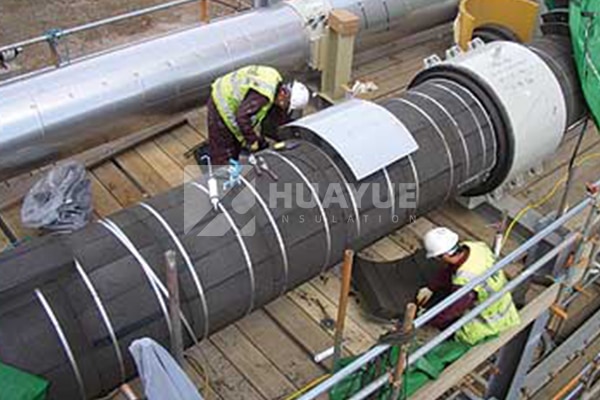
In industrial procurement, “foam glass” and “cellular glass” often describe a rigid glass-based insulation family, but the physical form still controls how the material is selected and installed. Boards or blocks may suit flat surfaces, equipment, tank areas, or load-bearing details. Pipe sections are shaped for straight runs, while fittings and fabricated segments address elbows, reducers, vessel heads, and other geometry where field cutting can increase joints and waste. Gravel is a different category again: it may be considered for filling, lightweight ground build-up, or drainage-related construction tasks, not automatically as a replacement for an industrial pipe or equipment insulation board.
The application should be stated before the supplier recommends a grade. A low-temperature pipe, a hot process line, a tank base, and a below-grade floor may all use cellular glass terminology while requiring different evidence, fabrication details, and accessory arrangements. The buyer should therefore identify the surface or equipment, approximate operating condition, exposure to water or vapor, mechanical loading, and whether the insulation will be above ground, buried, or inside a building envelope.
The BoroCell cellular glass insulation route publicly organizes HUAYUE products by boards, pipes, fittings, and gravel, alongside industrial and commercial application routes. That is a useful starting point for a supplier conversation, but a product-form list is not proof that every grade fits every project. Ask the supplier to connect the proposed form to the named application and provide the product-level documents that support the recommendation.
How Is Foam Glass Made?
Understanding the production route helps a buyer ask better questions about consistency, not just compare supplier marketing claims.
Foam glass is made by foaming or cellulating glass under controlled conditions, then annealing it into a rigid cellular material before cutting or fabricating it into the required form.
Glass feedstock is prepared, ground or otherwise conditioned, blended with a foaming agent, and heated until the glass develops a cellular structure. The expanded material then needs controlled cooling or annealing so that thermal stress is managed before blocks, slabs, pipe sections, or fittings are produced. Cutting, edge finishing, bonding, joint layout, packaging, and storage become part of the supply chain once the basic block has been formed.
For a buyer, the important question is not whether a supplier can describe foaming in general terms. It is whether the supplier can show how the material identity, product form, test method, and batch documentation stay connected. A supplier should be able to explain whether the quoted item is a standard board, a fabricated pipe section, a fitting, a block, or a granular product. Those terms should not be mixed in one generic data sheet.
ASTM C552 is a useful reference for industrial cellular-glass insulation because it addresses composition, dimensions, and physical properties, with qualification properties such as compressive strength, water absorption, water-vapor permeability, thermal conductivity, and surface-burning characteristics. It is a specification reference, not an automatic certificate for every product carrying the words “foam glass.” The supplier’s document should identify the product, grade, test method, and scope that apply to the quotation.
The manufacturing discussion also reveals whether a supplier can support application decisions. Consistent blocks are only one part of the result; pipe and fitting fabrication, edge quality, joint arrangement, adhesive or accessory compatibility, and protection during transport can affect the installed system. A technically capable China-based manufacturer should be prepared to discuss these interfaces in practical language and point the buyer to the relevant technical document instead of relying on a universal performance promise.
Is Foam Glass Insulation Waterproof?
Water resistance is one of the reasons cellular glass appears in industrial specifications, but the word waterproof can hide system-level conditions.
Closed-cell foam glass can resist liquid-water uptake and vapor movement at the material level; that does not make every joint, coating, interface, or installed assembly automatically waterproof.
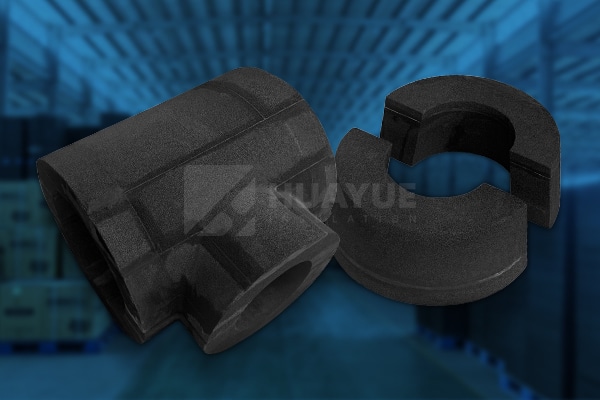
The closed-cell structure is the starting point for the moisture discussion. When the glass cells are sealed, the insulation body is less vulnerable to the water migration and wetting behavior associated with open, fibrous, or absorbent materials. That can be valuable around cold pipework, tanks, equipment, and buried or wet-service details where moisture control is part of the design brief. However, “waterproof” should be treated as a claim that needs a defined scope: material specimen, product form, joint, coating, cladding, or complete installed assembly.
An industrial foam glass supplier should separate those scopes. The board or pipe section may have a published water-absorption or vapor-permeability result, while the finished system also depends on cut edges, bond lines, penetrations, supports, jacketing, drainage, and inspection. A cellular-glass layer does not automatically replace a membrane, weather barrier, vapor retarder, joint seal, or corrosion-management detail. It can be part of a moisture-resistant insulation design, but the surrounding system still needs an engineering decision.
Pipe fabrication deserves particular attention. ASTM C1639 covers fabrication of cellular-glass pipe and tubing insulation and discusses limiting through-joints to optimize installed thermal performance. This is a useful reminder that a supplier’s ability to fabricate the correct shape and explain joint layout can be as important as the base material’s closed-cell description. When comparing suppliers, ask for the proposed section type, fitting method, joint treatment, and installation guidance.
The practical answer is therefore conditional: closed-cell foam glass may be a strong candidate where water and vapor control matter, but a supplier should never use a one-word waterproof claim to bypass product-level testing and system design. For an RFQ, ask for the named product’s moisture data, applicable test method, and the limits of the statement being made.
What Happens If Foam Glass Insulation Gets Wet?
An answer to “what happens when it gets wet?” must separate the glass body from the details that surround it.
If the cellular-glass body remains intact, wetting does not automatically mean the same failure mode as water-sensitive fibrous insulation; inspect cut edges, joints, damage, and the surrounding weatherproofing before accepting the installation.
A wetting event should trigger an inspection, not an automatic assumption that the material is either ruined or unaffected. First identify where the water reached: the exposed surface, an open cut, a damaged edge, a joint, a penetration, or the outer protection. Then check whether the product has fractured, shifted, opened at a seam, or lost contact with the substrate. The behavior of the glass body and the performance of the complete insulation system are related but not identical questions.
Cellular glass is rigid, so impact, rough handling, poor support, or concentrated loads can create damage that is more important than the water itself. A cracked section, open joint, or missing protective layer can create a path for moisture and can also change the thermal or mechanical behavior of the installation. This is why a supplier’s handling, storage, fabrication, and repair guidance should be treated as part of the technical package rather than as an afterthought.
For pipes and equipment, review the areas where water can remain trapped: seams, supports, penetrations, terminations, vessel heads, and transitions between insulation forms. For buried or below-grade uses, review drainage and the surrounding construction layers. For cold service, also consider condensation control, vapor sealing, and thermal cycling. The same material may perform differently when the installation has open joints or damaged jacketing.
This is where technical support creates practical value. A responsive supplier should help the buyer distinguish a product-material question from an installation-system question, identify the relevant document, and clarify what must be repaired or re-inspected. HUAYUE’s BoroCell route can be considered within that broader manufacturer conversation, provided the final recommendation is tied to a named product, application condition, and current technical evidence. The safe conclusion is not that every wet installation is harmless; it is that closed-cell material behavior should be assessed together with the condition of the complete system.
How Do You Choose an Industrial Foam Glass Supplier?
Supplier quality becomes visible in the questions the supplier asks before quoting, and in the evidence supplied after the quote.
Choose a supplier that can discuss application conditions, supply the correct form, explain fabrication and installation interfaces, and match technical documents to the named product—not merely send a generic price list.
Use the first supplier response as a technical screening step. A useful quotation should make it possible to compare like with like: the same product form, grade or density class, dimensions, test scope, application condition, and delivery basis. If one supplier quotes a board while another quotes a fabricated pipe section, a lower price may simply reflect a different scope.
| Supplier check | Why it matters | What to request |
|---|---|---|
| Product form and grade | Board, pipe, fitting, block, and gravel are not interchangeable | Named product, form, grade, dimensions, and current technical data sheet |
| Application fit | Temperature, moisture, loading, geometry, and location change the decision | Written selection rationale and applicable conditions or limitations |
| Technical evidence | A standard name alone does not prove product compliance | Product-level test report, standard reference, revision, and scope |
| Fabrication support | Joints, fittings, cuts, and interfaces can affect the installed system | Section or fitting details, joint guidance, and installation notes |
| Communication after quotation | Industrial projects often need clarification before approval | A technical contact who can answer the application and document questions |
For buyers comparing China-based sources, HUAYUE presents BoroCell as a cellular-glass manufacturing and supply route with boards, pipes, fittings, and gravel listed for industrial and commercial applications. That breadth is useful when the supplier can connect a product form with an application solution and the corresponding evidence package. It is less useful when a long catalogue is offered without a clear recommendation, a named-product data sheet, or a practical explanation of fabrication and installation.
This is also the point where an experienced insulation supplier can support a project without overpromising. The supplier should help narrow the inquiry: application, approximate operating condition, intended form, and any obvious loading or moisture constraint. Drawings, thickness, quantity, destination, packaging, and document requirements can then be developed progressively. The goal is a technically comparable RFQ, not a sales conversation built around unsupported “best” or “all-purpose” claims.
Before placing an order, confirm the legal supplier entity, product identity, manufacturing or fabrication scope, document revision, packaging method, and responsibilities for accessories or installation. Confirm whether the quoted product is for an industrial system or a building-envelope application, because the relevant standard and evidence route may differ. This discipline helps a procurement team evaluate Huayue/BoroCell on the same basis as any other supplier: product fit, evidence quality, application support, and clarity of communication.
Conclusion
Choose industrial foam glass by system need, not product name alone. A capable supplier connects material, form, application, fabrication, and evidence.
For a useful BoroCell discussion, start with the application and approximate operating condition; drawings, quantities, and document requirements can follow.