

Pipes lose heat. This raises costs. Insulation can help. How do we choose?
Cellular glass-closed cell pipe insulation is a high-performance material that offers thermal conductivity as low as 0.038 W/m·K. It prevents heat loss and withstands extreme temperatures from -450°F to 900°F.

Understanding the benefits and applications of cellular glass-closed cell pipe insulation can optimize industrial processes. This article delves into its various aspects.
What is cellular glass insulation for pipe?
Pipes get damaged. This leads to leaks. Insulation is crucial.
Cellular glass insulation for pipes is non-combustible and resistant to moisture. It provides excellent thermal protection and enhances longevity for industrial piping systems.
Key Benefits
- Thermal Efficiency: Cellular glass offers superior insulation due to its closed cell structure, minimizing heat transfer.
- Fire Resistance: With a melting point above 900°F, it reduces fire hazards.
- Durability: Resistant to corrosion and chemicals, it ensures longevity.
Comparison Table
| Property | Cellular Glass | Other Insulations |
|---|---|---|
| Thermal Conductivity | 0.038 W/m·K | Varies |
| Fire Resistance | Non-combustible | Varies |
| Moisture Resistance | Excellent | Moderate |
| Service Temperature | -450°F to 900°F | Limited Range |
The reliability of cellular glass-closed cell pipe insulation in harsh environments makes it a preferred choice for industries.
How does cellular glass-closed cell pipe insulation work in specific cases?
Pipes in harsh environments fail. This causes downtime. Insulation must endure.
In applications like LNG storage, cellular glass-closed cell pipe insulation maintains structural integrity under extreme cold, preventing operational disruptions and ensuring safety.
Case Study: LNG Storage
- Challenge: LNG pipes require insulation that can withstand temperatures as low as -260°F.
- Solution: Cellular glass' closed cells prevent heat ingress, keeping LNG at optimal conditions.
- Outcome: Enhanced safety and reduced risk of thermal shock.

Industries involving cryogenics benefit from the unmatched performance of this insulation type.
How is cellular glass-closed cell pipe insulation designed?
Design impacts effectiveness. Poor design causes failures. Proper design is key.
Cellular glass-closed cell pipe insulation is designed with a uniform closed cell structure, ensuring consistent thermal protection and minimizing heat flow across the material.
Design Elements
- Closed Cell Structure: Ensures impermeability to moisture and gases.
- Uniformity: Consistent cell size distribution enhances thermal performance.
- Density: Carefully controlled to balance strength and insulation efficiency.
These design features make cellular glass a versatile solution for diverse industrial applications, ensuring reliability and efficiency.
What is the engine behind cellular glass-closed cell pipe insulation?
Manufacturing consistency matters. Variability leads to defects. Precision is critical.
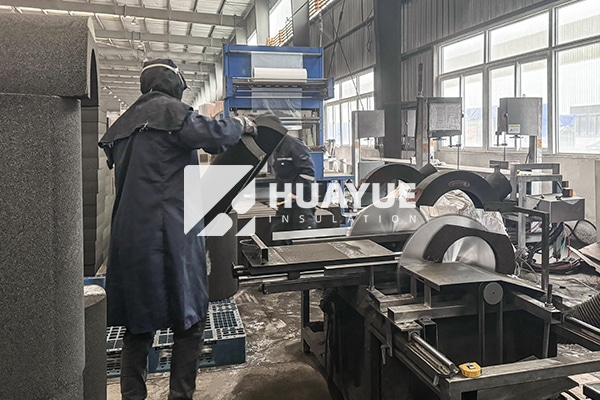
The engine behind cellular glass-closed cell pipe insulation is its precise heat treatment process, achieving consistent material properties with densities ranging from 100 to 160 kg/m³.
Manufacturing Process
- Raw Material Selection: High-quality glass cullet is chosen.
- Mixing and Foaming: Materials are mixed and heated to form a cellular structure.
- Annealing: The product is slowly cooled to stabilize the structure.
- Cutting and Finishing: Precision cutting ensures uniformity.
This meticulous process guarantees the high quality of cellular glass-closed cell pipe insulation, meeting industry standards.
How is cellular glass-closed cell pipe insulation inspected?
Quality control is essential. Flaws reduce effectiveness. Inspection ensures reliability.
Cellular glass-closed cell pipe insulation undergoes rigorous inspections, including dimensional checks and thermal conductivity tests, to ensure it meets stringent industry standards.
Inspection processes help detect any inconsistencies that could affect performance. Techniques include:
- Visual Inspections: Ensures uniformity in appearance and surface finish.
- Thermal Testing: Confirms conductivity values remain within specified ranges.
- Mechanical Testing: Assesses strength and resistance to compression.
These inspections ensure that each piece of insulation performs as expected, providing reliable service in industrial applications.
Conclusion
Cellular glass-closed cell pipe insulation offers unmatched thermal efficiency and durability. Its unique properties make it indispensable for industrial applications, ensuring safety and cost savings.