
Glavel foam glass gravel is a named foamed-glass aggregate for construction, not a rigid cellular-glass board.
Glavel’s current technical guide reports R-1.7 per compacted inch. The product is made from recycled glass expanded into closed-cell aggregate, while current pricing is quote-based rather than a published list price.
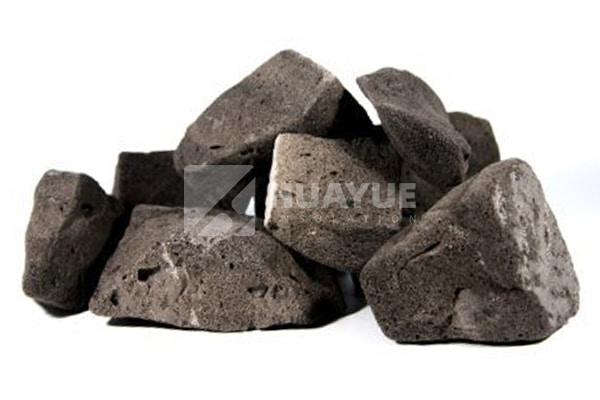
The four questions below explain the number, the price evidence, the applications, and the manufacturing route so buyers can compare the product on a delivered and engineered basis.
What Is the R-Value per Inch for Glavel Foam Glass Gravel?
Glavel’s published thermal value is useful, but it must be read as a compacted aggregate-layer value rather than a board-insulation rating.
Glavel foam glass gravel is rated at R-1.7 per compacted inch. A simple nominal calculation gives about R-10.2 at 6 inches, R-20.4 at 12 inches, and R-30.6 at 18 inches before assembly effects are considered.
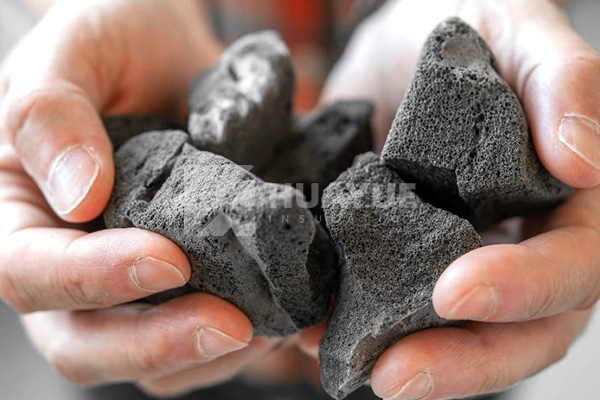
The current Glavel Infrastructure Technical Guide identifies the value as R-1.7 per compacted inch. Its residential guide shows a typical slab-on-grade assembly using 12–18 inches of compacted foamed glass aggregate, described as providing approximately R-20–R-30 continuous insulation together with drainage. The arithmetic is consistent with the published per-inch value, but the result is still a planning calculation, not a substitute for a project-specific energy model or code review.
Compaction matters because the material is placed as aggregate, leveled in lifts, and compacted before the next layer is installed. Glavel’s residential guidance describes 25% compaction using a lightweight vibratory plate and recommends splitting deeper installations into lifts. The compacted thickness should therefore be measured after the specified installation process, not inferred from the loose pile depth. The same guide states that the aggregate does not absorb moisture and that its R-value remains stable in damp conditions; that statement belongs to Glavel’s named product and should not automatically be transferred to every foam-glass aggregate.
The R-value also describes the Glavel layer, not the whole floor or foundation assembly. Soil conditions, slab construction, thermal bridges, joints, air leakage, the vapor-control layer, and workmanship affect the building result. A buyer should also confirm whether the design target is material R-value, total assembly R-value, U-value, frost protection, or a combination of these requirements.
This distinction prevents a common category error: loose foam glass gravel, cellular-glass board, and rigid polymer foam are different product forms. Their thickness, test method, installation, and load behavior are not interchangeable. For a quotation or submittal, record the named product, compacted thickness, test basis, density, compressive requirement, and the exact assembly where the value will be used.
How Much Does Foamed Glass Aggregate Cost?
Price is a budgeting question, but historical list prices should not be presented as a current Glavel quotation.
Glavel’s current website directs buyers to request project pricing. Historical published figures include about $65 per cubic yard plus freight and an older East Coast range of $85–$100 per cubic yard; neither is a current guaranteed price.
The current Glavel pricing page does not publish a live unit price. For context only, JLC reported $65 per cubic yard plus ground transit in 2022, while an older Green Building Advisor report described $85–$100 per cubic yard on the East Coast. These figures are useful for understanding how the product has been discussed in the market, but their dates, freight assumptions, production conditions, and regional context make them unsuitable as a 2026 budget quote.
Delivered cost can change substantially with the project location, order volume, bulk or supersack delivery, loading and unloading equipment, access conditions, and the required compacted depth. The Glavel Residential Technical Guide describes 3-cubic-yard supersacks weighing roughly 900 pounds, while the infrastructure guide describes loose-bulk and supersack delivery options. Those logistics affect both freight and site handling, especially when the material is replacing several conventional layers.
Material price is only one part of the comparison. Foam glass gravel may combine lightweight fill, drainage, and thermal insulation in one layer, so the meaningful comparison is often the installed assembly: aggregate, rigid insulation, labor, handling, site access, and the coordination of multiple layers. That does not mean it will always be cheaper. It means a unit-price comparison with crushed stone or foam board alone can hide the actual scope of work.
For a defensible budget, ask for a delivered quote based on the installation location, compacted volume, target thickness, delivery format, unloading responsibility, and desired delivery window. If the project is sourcing a different manufacturer, do not use a Glavel price as a proxy. For example, BoroCell’s separate HUAYUE® CFGA1060 closed-cell foam cellular glass gravel is sold through a project quotation route with its own product data and packaging options.
What Is Foam Glass Aggregate Used For?
Foam glass aggregate is selected when one project layer needs a useful combination of low weight, drainage, thermal insulation, and load-supporting fill.
Common uses include subslab and foundation insulation, insulated backfill, green roofs, lightweight fill for roads and bridges, embankments, slope work, and selected landscaping applications.
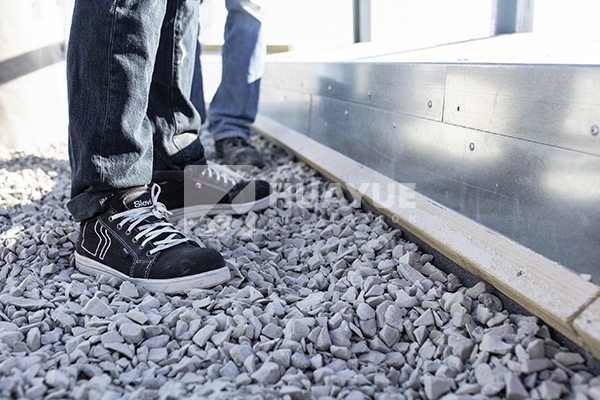
The most recognizable application is under a slab or foundation. A compacted layer can provide thermal resistance and drainage while replacing part of the conventional stone-and-board sequence. Glavel’s residential guide also describes use beneath frost-protected shallow foundations and as insulated backfill around foundation perimeters. These applications require a designed layer, appropriate separation and protection materials, and compliance with local code and the project engineer’s details.
The same material class can serve civil-engineering needs where soil bearing, settlement, or excavation depth is a concern. Glavel’s infrastructure guide describes lightweight fill uses, while its product literature highlights bridge approaches, embankments, and other load-bearing fill applications. Reducing fill weight can be valuable over soft or compressible soils, but the design still needs the actual density, compaction state, friction behavior, and load requirements for the project. A material being lightweight does not by itself make every slope, footing, roadway, or retaining-wall application suitable.
Roof and landscape uses need a more careful distinction between cell structures. Closed-cell aggregate is generally chosen when insulation, water resistance, and stable fill are central requirements. Open-cell cellular glass gravel can be selected for water and air exchange in filtration, bioretention, bioswales, or root-zone applications. These are not interchangeable just because both products are called foam glass gravel. The BoroCell OFGA1060 open-cell gravel is an example of a separate product with a different application profile from the closed-cell CFGA1060.
Installation conditions are part of the use case. Glavel’s guides call for controlled lift thickness, specified compaction, geotextile or separation layers, and a protective cap or vapor barrier where the assembly requires one. Exposed aggregate should not be treated as a finished traffic surface. Buyers should send drawings or a short application description when asking for a comparison, rather than selecting by the words “lightweight fill” alone.
What Is Foam Glass Gravel Made Of?
Foam glass gravel is glass that has been expanded into a cellular structure and then fractured into aggregate-sized pieces.
Glavel describes its feedstock as 100% post-consumer recycled glass. The process cleans and mills the glass, blends it with a foaming additive, heats it in an electrified kiln, and fractures the expanded slab into closed-cell gravel.
The Glavel Residential Technical Guide describes recycled glass being cleaned and ground into powder, combined with a foaming additive, and heated gradually to about 1,600°F. As the mixture softens, the additive creates a network of closed-cell micropores. The expanded glass slab then exits the kiln and fractures because of thermal stress, producing the irregular aggregate shape used on site. This is why the product looks more like dark lightweight stone than like a smooth foam board.
The material is therefore not a plastic foam filled with glass particles. Its cell walls are glass, and the trapped cellular structure supplies the low density and thermal resistance. The Glavel product page identifies the aggregate as a construction material that combines insulation, drainage, and compressive performance. Product-specific claims about fire behavior, moisture, strength, or environmental impact should still be read from the current technical guide or verified submittal rather than assumed from the generic term “foam glass.”
This composition also explains why supplier comparisons must be product-specific. BoroCell’s separate HUAYUE® CFGA1060 product page lists a closed-cell recycled-glass gravel with 10–60 mm grain size, 150–170 kg/m³ bulk density, thermal conductivity of no more than 0.115 W/(m·K) at 10°C, and compressive strength of at least 0.37 MPa. Those are HUAYUE® product values, not Glavel values, and thermal conductivity should not be converted into an R-value without confirming thickness, units, test basis, and design conditions.
For procurement, the useful material checklist is simple: named manufacturer and model, open or closed cell structure, particle-size range, bulk density, thermal metric and test method, compressive data, water behavior, packaging, delivery format, and the intended application. That information lets an engineer compare a named alternative honestly instead of treating every recycled-glass aggregate as the same product.
Conclusion
Choose Glavel by compacted R-value, delivered cost, cell type, and engineering data; for a separate HUAYUE® gravel quotation, share the application and approximate volume.