
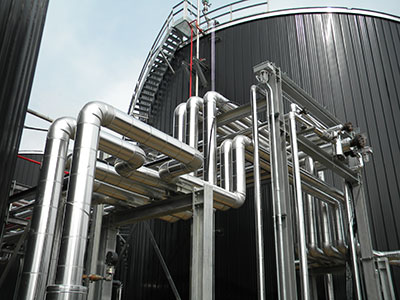
Piping in demanding industrial settings faces high temperature swings, corrosion risk, and harsh conditions. Foam glass insulation can solve these problems and make savings for plant operations.
Foam glass pipe insulation offers strong thermal performance, non-absorption, and fire safety for piping systems. It resists water and chemical attack, making it ideal for long-term use and minimal maintenance.

Pipes often fail due to temperature extremes or unseen moisture penetration. If insulation is weak, this can lead to corrosion and heat loss. Foam glass solves these issues. Let’s look deeper at how foam glass pipe insulation controls risks and improves efficiency.
Why Is Foamglas Pipe Covering & Insulation the Best Choice for Industrial Facilities?
Pipe insulation must handle moisture, chemical attack, and high temperatures. Without protection, expensive repairs and safety hazards follow. Foamglas insulation reduces these risks and improves reliability.
Foamglas pipe covering combines low thermal conductivity with complete non-absorption. It stays dry and rigid in harsh conditions, supporting load and protecting pipes from corrosion and fire.

Many materials absorb moisture or break down because of heat and chemicals. Foamglas uses cellular glass—a closed-cell structure that does not absorb water or vapor. This simple change prevents corrosion under insulation (CUI) and stops chemical attack from inside or outside the plant. The foam glass shell wraps directly over the pipe, preventing entry points for water or gases.
It also resists fire. Foamglas does not burn or produce smoke, even in a severe fire, so it keeps protecting the pipe during emergencies. Maintenance crews appreciate the rigid structure and ease of cutting. With foamglas, operating temperatures from -200°C up to +430°C remain stable. The insulation supports walk-on loading, making overhead pipe racks safer and easier to inspect.
When energy savings are key, foamglas keeps heat in and cold out. Facilities running cryogenic systems, steam pipes, or chemical lines see lower operational costs right away. The long lifespan reduces replacements, lowering unplanned shutdowns and boosting total safety performance.
For a quick summary: Foamglas pipe covering has zero water absorption, is non-combustible, offers high chemical resistance, has a wide temperature range, is load-bearing, and gives low life cycle cost. These traits make it much more reliable than mineral wool or polyurethane foam.
How Does Cellular Glass Perform on LNG Systems?
Insulation for LNG piping must block water and vapor. If water enters, safety and efficiency collapse. Cellular glass insulation stops these problems.
Cellular glass insulation does not absorb liquid, maintains its shape under heavy loads, and resists freeze-thaw cycles used in LNG systems.
LNG systems run at extremely cold temperatures and carry flammable liquids. If the insulation fails, ice forms, pipes freeze, hazardous leaks occur, and safety risks go up. I have seen where mineral wool and other types began to sag and allow moisture entry, forcing emergency maintenance.
Cellular glass fights these problems. Made from pure glass melted and foamed into millions of tiny sealed cells, it repels liquid and vapor at every step. The rigid structure handles pipe movement from temperature swings. On cryogenic LNG pipelines, this stability keeps the system safe for years after installation.
It also blocks heat transfer perfectly. LNG must stay cold from the dock to the tank. Cellular glass stops outside heat from entering, keeping boil-off gases low. No insulation could solve these challenges unless it resists water, chemicals, and extreme cold. Cellular glass does all of these. This means fewer shutdowns, lower maintenance, and a much safer system overall.
In brief: Cellular glass is waterproof, handles cryogenic temperatures, gives outstanding fire safety, supports loading, and has the lowest maintenance cost when compared with expanded perlite or rigid foam.
What Are the Specifications for Foam Glass in Piping Thermal Insulation?
Selecting insulation for industrial pipes requires toughness, fire-resistance, and standards compliance. Foam glass hits every target.
Foam glass insulation is specified for pipes with strict density, compressive strength, and fire safety ratings, plus certifications for global projects.
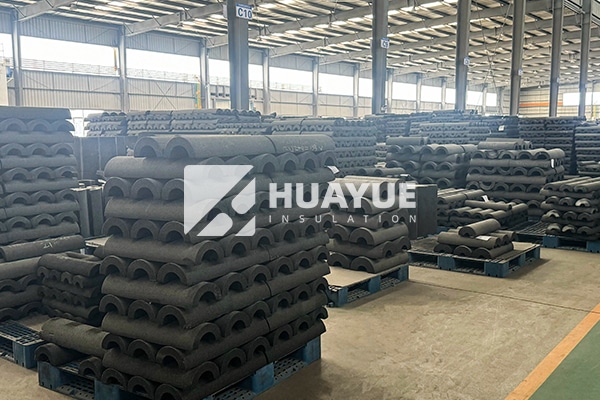
Foam glass insulation comes in pipe sections, elbows, and tank wrapping kits. Densities range from 120-160 kg/m³ with compressive strength up to 800 kPa which supports heavy loading and lets workers access the racks. Fire safety meets EN, ASTM and ISO standards. Most foam glass insulation carries CE and SGS markings, so the material can be used in international projects.
The closed-cell structure repels water instantly, so it passes every non-absorption test. The insulation resists acids, solvents, and all common industrial chemicals. For low-temperature piping, foam glass is specified for performance from -200°C to +430°C. I always check that vendors supply ISO 9001 and 14001 quality certificates. Many customers require pre-cut or CNC-shaped segments for fast installation as well.
Foam glass offers long life and low maintenance, which means lower full cycle costs than alternatives. For sustainability, it contains no harmful blowing agents, and installers appreciate that waste is fully recyclable.
To sum up the key specs: Foam glass pipe insulation has densities from 120-160 kg/m³, compressive strength up to 800 kPa, a service temperature range of -200°C to +430°C, zero water absorption, non-combustibility by European standards, and multiple international certifications.
Conclusion
Foam glass pipe insulation is safe, tough, fire-resistant, and reliable, providing decades of protection for industrial piping under the harshest conditions.