
Worried about choosing the right insulation for your pipes? Picking the correct foam glass pipe insulation density is key to reliable performance, safety, and cost savings.
Foam glass pipe insulation density refers to the mass of the insulation material per cubic meter, usually measured in kilograms. The right density gives you strong insulation, mechanical strength, and ensures the system lasts in industrial and commercial settings.
When I first faced the problem of selecting pipe insulation, I realized there were dozens of options. Looking at the density numbers, I wondered which would work best for my needs. Understanding these numbers helps you avoid common mistakes like poor insulation or unnecessary costs that are hard to fix later.
What is foam glass insulation used for?
Choosing insulation for your pipes can feel overwhelming. People worry about condensation, heat loss, and fire protection. The right insulation can solve these problems.
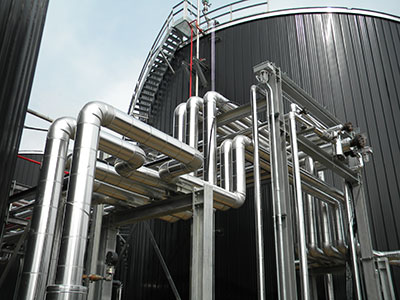
Foam glass insulation is widely used on industrial and commercial pipes, tanks, and equipment to prevent heat loss, stop water absorption, and provide fire resistance. It also does not support mold, pests, or microbial growth.
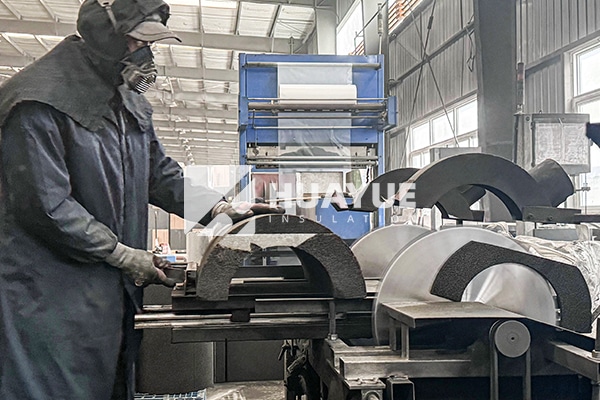
I remember working on a project where everything depended on finding an insulation material that could handle chemicals, extreme temperatures, and wouldn’t fail over time. Foam glass stood out because it is made from recycled glass powder, which makes it environmentally friendly while also being tough. It is common on cryogenic pipelines, petrochemical plants, nuclear facilities, and commercial buildings that need reliable performance. It handles temperatures ranging from very cold to very hot without changing shape or breaking. Because it does not absorb any water, it stops rust and corrosion under insulation, which can destroy other materials. Fire resistance is another huge benefit. It will not burn, so it adds a layer of safety. These qualities are big reasons why decision-makers choose foam glass insulation for demanding jobs.
What is Borocell CGSN160 Cellular Glass pipe?
Choosing the best material for industrial pipes is difficult. If you do not get the right insulation, you end up dealing with leaks, energy loss, and frequent repairs.
Borocell CGSN160 Cellular Glass pipe is a high-density insulation segment made for straight industrial pipes. It has a density of 160kg/m³, a minimum thickness of 25mm, and an inner diameter of at least 168mm. Each section is 500mm in length, which allows for easy installation plus strong performance in large piping systems.
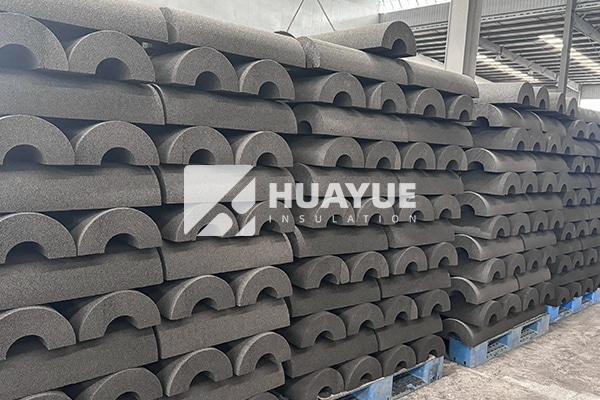
I once faced a project with huge, high-pressure pipes that needed insulation resistant to compression and fire. Since Borocell CGSN160 Cellular Glass is tough, it performed well even under high loads. The higher density means it remains stable, does not deform, and provides excellent insulation. Being prefabricated, these pipe segments are quick to install, making them a smart choice for busy work sites. The product does not draw in water, which means there is less chance of hidden corrosion. Workers spend less time fitting the segments, which makes the process faster and lowers the labor cost. Over time, the stable insulation kept heat from escaping, saved energy, and extended the pipe system’s lifespan. In short, CGSN160 is for those projects where excellence in safety and long-term value is non-negotiable.
What is Borocell CGSN120 Cellular Glass pipe?
Sometimes, projects need something lighter or adjustable. When I had to insulate some huge-diameter pipes, I learned the difference in density firsthand.
Borocell CGSN120 Cellular Glass pipe comes with a density of 120kg/m³. It is a lighter insulation option for large pipes, with single-layer thicknesses ranging from 25 to 80mm and double-layer thicknesses up to 80mm. The smallest inner diameter is 273mm, and each pipe section is 600mm long.
This product is perfect for situations where minimizing weight is important or where pipe diameters are especially large. The lower density makes it easier to handle and still gives reliable insulation. I discovered this when dealing with equipment that could not take on much extra load. Besides saving weight, Borocell CGSN120 Cellular Glass also maintains all the benefits, like water resistance, fire safety, and durability. It does not break down over time, and you do not get any sagging or gaps. You can use it alone or layer it for extra protection. This flexibility lets you meet the unique needs of special projects and still get high performance. In my experience, CGSN120 is a go-to for engineers who need a lightweight yet highly functional insulation for large or sensitive piping runs.
Conclusion
Picking the correct foam glass pipe insulation density, like Borocell CGSN120 or CGSN160, ensures safe, energy-efficient, and long-lasting pipe systems for any industrial challenge.