
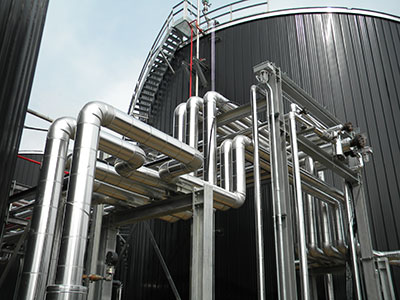
The density of foam glass insulation is a crucial factor that impacts both safety and efficiency. If you overlook this, you may face hidden risks and higher costs for your tanks.
Foam glass insulation usually has a density between 100 and 180 kilograms per cubic meter. Most industrial projects use densities of 120 or 140. These offer a good balance between strength, weight, and insulation performance for tanks and pipelines.

Choosing the right density is not a detail you can ignore. It affects how your insulation will perform under load and how reliably it keeps temperatures stable over time. Now, I’ll show you why the right density is important and what it means in the real world.
What is the density of foam glass insulation?
If you pick the wrong density, your tanks may suffer from poor insulation or physical damage. Repairs and downtime can quickly become a headache.
Foam glass insulation generally comes in densities from 100 to 180 kilograms per cubic meter. The 120 or 140 ranges are common, chosen for their combination of strength and insulation.
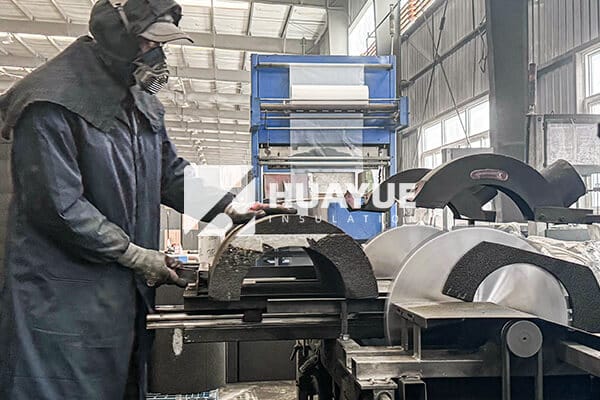
Let me break down how this works in practice. Lower densities around 100 make foam glass light and easier to handle, though it’s not as strong. These lighter blocks work well where physical loads are low, for example on standard pipelines that do not support heavy structures. Once you get to densities near 130 or 140, the foam glass becomes tougher while still providing excellent insulation. This makes them the right choice for most cryogenic tanks, spheres, and heavy duty pipeline systems. If you need more physical support, for example under heavy walkways or large tank bases, you will want something closer to 160 or even 180. Just know that the highest densities add weight and cost.
In my own work, I see 120 and 140 used for almost all industrial tanks because they are strong enough for the job but not overbuilt. Always check what your standards require. Picking an inappropriate density could lead to higher costs, or worse, failures that you could have avoided with the right choice at the start.
What are the properties of FOAM GLASS insulation?
When you focus too much on density, you may forget important features of foam glass that are essential for long-term safety and performance.
Foam glass insulation is known for its fire resistance, water resistance, chemical stability, and mechanical strength. These properties set it apart from other materials used in tanks and pipelines.
Fire resistance comes first for me. Foam glass will not burn. In a fire, it stays in place and protects tanks from rapid temperature spikes. This meets safety codes and brings peace of mind.
The closed cell structure blocks water. No matter how humid or wet your plant is, foam glass will not soak up water. This prevents corrosion under insulation—one of the biggest threats to steel tanks and pipes. I have seen projects where water-damaged insulation led to expensive repairs, but this does not happen with foam glass.
Foam glass keeps its shape under heavy loads. You can put it under tanks, pipe racks, and walkways without worrying it will squash or warp. This stability is essential on long projects.
It resists chemicals and even strong acids and industrial solvents. This means performance is consistent for decades. Foam glass also does not attract insects or support bacteria and mold growth. This extends insulation life and reduces health risks around sensitive chemical or pharmaceutical storage.
Lastly, foam glass provides a very low thermal conductivity. Even as you move up in density, you get strong insulation that keeps cold in and heat out. That is what makes foam glass so useful for cryogenic tanks, LNG, and chemical storage.
When I specify insulation, I do it for these reasons: fire safety, water resistance, strength, chemical stability, and, of course, insulation power. If you forget one, your whole system may be at risk.
What are the Standard of FOAM GLAsS?
Confusion comes quickly when someone asks which standards your foam glass insulation must meet. Missing these requirements puts your project at risk of non-compliance.
International standards for foam glass include EN 14305 in Europe, ASTM C552 in the United States, and DIN 2016 in Germany. These define how foam glass is tested for density, strength, fire safety, and environmental impact.
Understanding standards is not just about ticking boxes. They ensure that every block of foam glass you buy will do its job. For example, EN 14305 tells me I need to prove actual density and strength. It also means the product has passed important fire resistance and water absorption tests. ASTM C552 does the same for American projects, with specific rules for how foam glass is made, measured, and packed. German projects rely on DIN 2016, which is detailed and tough, making sure insulation stands up in the most extreme industrial environments.
When you buy foam glass, ask for ISO 9001 and CE certifications. These show the factory has a quality system and can sell in Europe. If you export or buy globally, SGS validation is needed. In my projects, I do not accept foam glass blocks that do not include these certificates. At first, it may seem like extra paperwork, but it always saves time and trouble by removing untested products from the supply chain.
If you want to avoid expensive mistakes, start by asking for and checking these standards from the very first quote. They make all the difference in a safe, durable, and legally compliant tank system.
Conclusion
Foam glass insulation density, its key properties, and compliance with standards are the foundations for the safety and efficiency of any industrial tank or pipeline.