
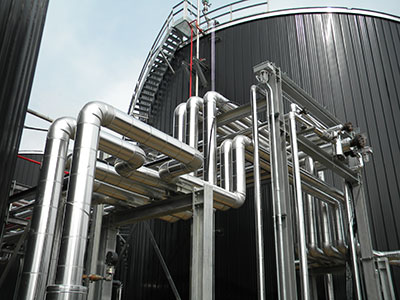
Industry professionals face a tough choice: finding thermal insulation that really delivers. The density of foam glass insulation is a key factor you cannot afford to ignore.
Foam glass insulation density usually ranges from 100 to 200 kg/m³. This density provides a balance between compressive strength, thermal performance, and lightweight properties, making it well suited for industrial tank insulation and other demanding applications.
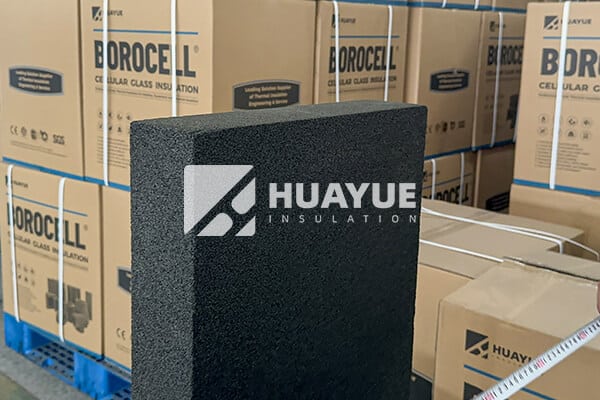
When you look at thermal insulation for tanks, you always run into the same concerns: Will it last? Will it handle tough conditions? Will it save on energy bills? Understanding foam glass insulation density can help you make the best choice for safety, performance, and long-term cost savings. Let’s break down how this property makes a difference and what else you should know for your next project.
What is the density of glass foam?
The insulation industry often confuses density with strength and durability. Not knowing the difference can lead to lousy material choices and expensive problems later on.
The density of foam glass insulation generally falls between 100 and 200 kg/m³. This range delivers enough strength for industrial use, resistance to compression, and long-lasting energy savings.

Density influences three main properties: structural strength, heat conductivity, and overall weight. For example, a foam glass board at 120 kg/m³ might offer a sweet spot—still light enough for easy installation, but tough enough for a tank’s roof, wall, or base. Take the massive tanks I once helped insulate at a chemical plant. Our team chose a mid-density foam glass—crucial for ensuring that, even after years of load and exposure, the insulation stayed stable and did not deform.
When choosing density, I always think about where in the tank system each insulation panel will go. For tank roofs, I recommend light to mid-density foam glass, usually between 100 and 120 kg/m³, to keep installation easy while avoiding extra weight overhead. For the tank bases, the density needs to go higher, often between 160 and 200 kg/m³, to handle the compressive force from large, heavy volumes. For vertical tank walls, I look for panels with density between 120 and 150 kg/m³, focusing on thermal protection and ease of attachment. If I have to insulate footpaths or pipe supports, only very high-density foam glass—above 180 kg/m³—makes sense, because it resists crushing from loads and repeated traffic.
Choosing the right density is not just about specs on paper. It is also about how the insulation will hold up when things get tough, like during a sudden freeze or a long-term maintenance gap.
What is cellular glass insulation made of?
There’s noise in the market about “green materials,” but many options still rely on harmful chemicals or risky processes. Choosing what goes into your insulation can affect every part of your plant’s operation and safety.
Cellular glass insulation is made from crushed glass, mixed with a foaming agent (like carbon or carbon black), then heated until the glass melts and forms a closed-cell structure, trapping insulating gas inside.
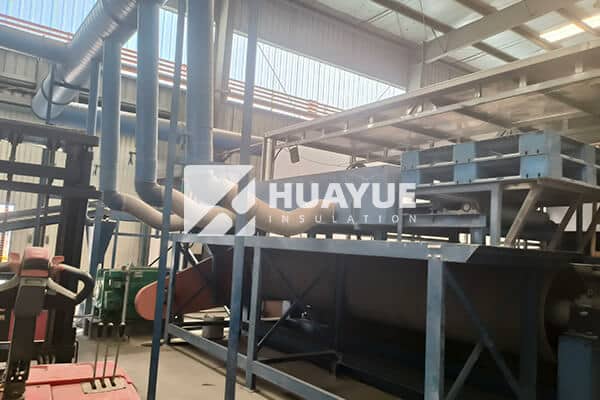
Starting with waste glass, manufacturers crush it into a fine powder. This powder is mixed with a small amount of carbon additive—usually carbon black or sometimes a graphite powder. Mixing is key, because any imbalance can throw off the foaming process later on. The blended mix gets loaded into ceramic molds and sent into a furnace. In the high heat, the carbon reacts, generating carbon dioxide and other gases, which create millions of tiny bubbles inside the molten glass. The result is a block with a closed-cell structure. After slow cooling to avoid cracking, the block is cut or shaped as needed—it becomes tough, waterproof, and fireproof.
This manufacturing method relies mainly on recycled glass, with no organic binders and no toxic chemicals. The finished foam glass does not emit fumes or leach substances, so it is safe for human workers and meets tough safety standards. I value this especially for storage tanks handling volatile chemicals, cryogenic fluids or clean water. Choosing cellular glass means you get insulation that is safe, effective, and easy to work into any tank design, all without worrying about off-gassing, corrosion, or premature failure.
What is the downside of cellular glass insulation?
Even the best insulation can have limits. Blind optimism about cellular glass can backfire if you do not consider the known drawbacks.
The main downside of cellular glass insulation is its higher initial cost compared to materials like mineral wool, and it can be brittle if handled roughly during installation.
Cellular glass insulation tends to be more expensive than mineral wool or polyurethane foam. This initial cost can raise budgets, especially on big industrial tank projects—sometimes two or three times more up front. However, the extra cost often pays off over time, because foam glass resists water, fire, and chemicals better than most alternatives. It does not absorb water, so there is no risk of insulation breakdown or corrosion under insulation.
However, brittleness is another issue. If installers drop, force, or cut the blocks too roughly, the material can crack or break. This leads to wasted panels or delays. In my experience, training installation teams and using proper cutting tools solves most of this problem, though it does add time to the schedule.
When comparing cellular glass to mineral wool, mineral wool has lower cost and is easier to handle—it bends and flexes without cracking—which is why many budget-conscious projects choose it. But mineral wool absorbs water; if tank insulation gets wet, the risk of corrosion or mold grows. Polyurethane foam, meanwhile, has worse fire resistance and a shorter lifespan, though it installs quickly with spray equipment.
I always tell clients: cellular glass is a strategic choice. You pay more up front, but you avoid water damage, corrosion, and frequent replacements, so you save money and trouble in the long run.
Conclusion
Foam glass insulation density matters—it affects strength, heat loss, and lifetime value. Always balance density, raw materials, and handling needs to get the best result for critical tank projects.