Cellular Glass Insulation for Tanks, Piping & Cryogenic Systems
Rigid closed-cell insulation components for tank bases, cold-service piping, cryogenic systems, pipe supports and industrial equipment. Submit operating temperature, dimensions, loads and project specification for a technical supply review.
- Board, block and fabricated component routes
- Project-specific size, shape and load review
- Datasheet, test-report and quotation support
Include temperatures, dimensions, loads, required standard, quantity and destination. Drawings are strongly recommended.
Match the Cellular Glass Form to the Service Condition
Industrial performance depends on vapor ingress, joints, loads, support details, thermal contraction, cladding, installation method and the required project standard—not nominal temperature alone.

Tank Bases
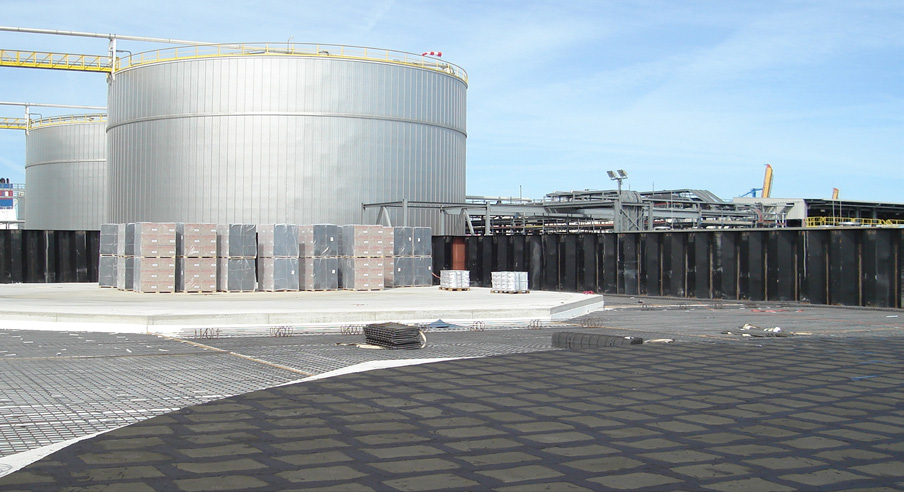
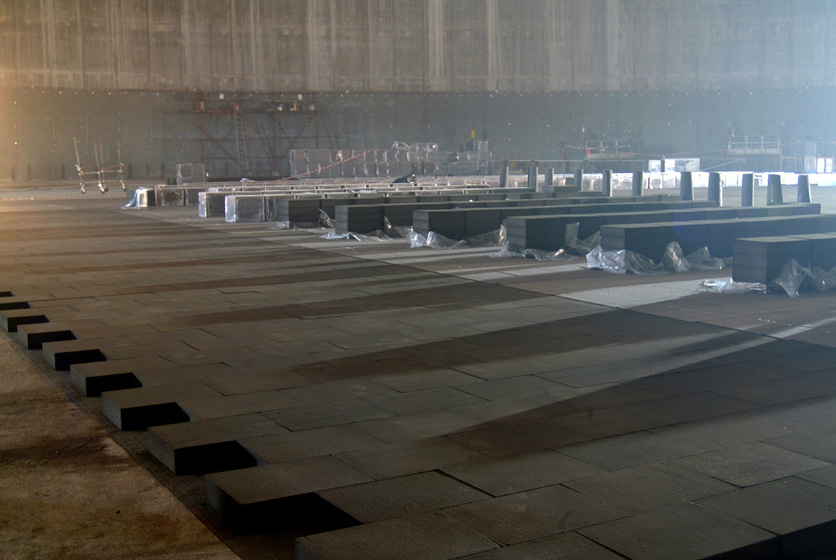
Load-bearing cellular glass for selected storage tank bases where insulation and compressive performance must work together.
Review: medium, temperature, base geometry, load, settlement criteria and foundation.

Cryogenic & Cold Piping
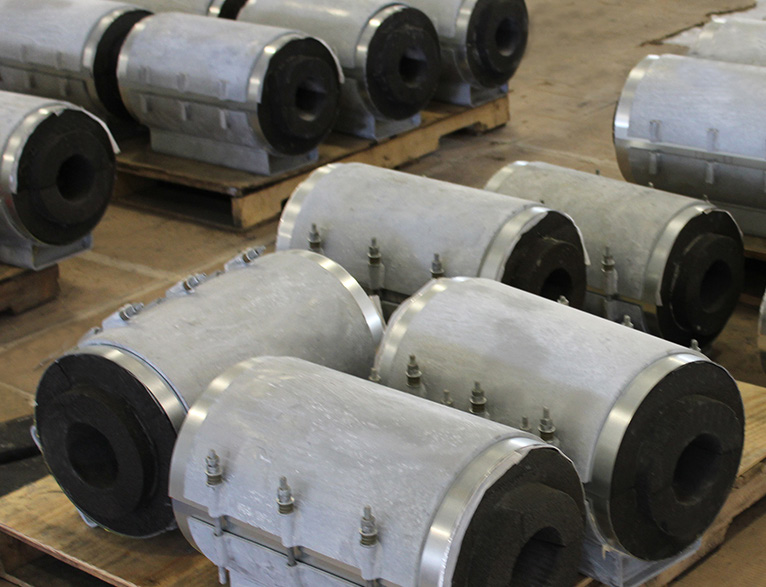
Fabricated components for cold and cryogenic piping requiring rigid, vapor-resistant insulation.
Review: pipe OD, temperatures, layers, joints, vapor retarder, cladding and specification.
Pipe Supports & Inserts
High-load components for selected support locations while maintaining the insulation envelope.
Review: support type, load, contact area, temperature, allowable stress and dimensions.
Vessels & Equipment
Boards, blocks or fabricated segments for selected vessels and equipment where geometry can be accommodated.
Review: diameter, nozzles, cycling, attachment, cladding and fabrication drawings.
Designed Around the Failure Risks of Industrial Insulation
Closed-Cell Vapor Resistance
The closed-cell structure helps restrict water and vapor movement. System performance still depends on joints, penetrations, vapor-retarder continuity, cladding and installation quality.
CUI Risk Reduction
Limiting moisture entry supports CUI risk management, but no insulation alone eliminates CUI. Coatings, weather protection, inspection and maintenance remain essential.
Low-Temperature Dimensional Stability
Product grade, layer arrangement, joint design and thermal-contraction details must match actual operating and ambient temperatures.
Compressive and Load-Bearing Capability
Selected grades can be evaluated for tank bases, supports and load-bearing locations using verified data, design safety factors and project calculations.
Available Routes Depend on Geometry and Project Specification
The routes below require confirmation of current product forms, grades, dimensions and fabrication capability before quotation.
| Project requirement | Typical cellular glass route | Buyer information required |
|---|---|---|
| Large flat load-bearing area | Board or block configuration [Confirm] | Drawing, load, temperature, dimensions and foundation detail |
| Straight cold-service pipe | Fabricated pipe sections or segments [Confirm] | Pipe OD, thickness, layers, temperature and quantity |
| Large-diameter piping or vessels | Curved segments or fabricated blocks [Confirm] | Diameter, curvature, drawings, joints and cladding |
| Pipe-support load transfer | High-load block or insert [Confirm] | Support drawing, load case, contact area and temperature |
| Fittings and complex geometry | Fabricated segments [Confirm] | Isometric drawing, dimensions, tolerances and quantity |
A Technical Review—Not Just a Price Reply
1. Application Check
We identify whether the project concerns a tank base, straight pipe, fitting, support, vessel or equipment system.
2. Missing-Data List
We identify missing temperatures, loads, dimensions, drawings, standards, quantities or delivery details.
3. Proposed Supply Route
Subject to confirmation, the response may include product form, grade, dimensions, fabrication route and documents.
4. Commercial Follow-Up
Once the technical basis is clear, the quotation, sample, production and shipment route can be discussed.
Potential review output: product-form recommendation · dimension/fabrication proposal · available document list · clarification questions · packaging and preliminary quotation route
Production, Fabrication and Delivery Planning
Product & Fabrication Review
Share drawings or dimensions for boards, blocks, pipe sections, curved segments or support components. Availability requires production review.
Batch & Quality Control
Link the proposed product to current inspection criteria and product-specific documents. Agree any witness requirements before production.
Rigid-Component Packaging
Plan protective packaging, labeling and handling for fabricated components and project-sequenced deliveries.
Warehouse & Shipment
Discuss production lots, storage, container planning, delivery sequence and site-receiving constraints.

What to Send for a Responsible Review
- Application and process service
- Minimum, normal and maximum temperatures
- Pipe, equipment or base dimensions
- Design loads and support details
- Required standard and document list
- Quantity, destination and project timing
Build the Submittal Around Verified Evidence
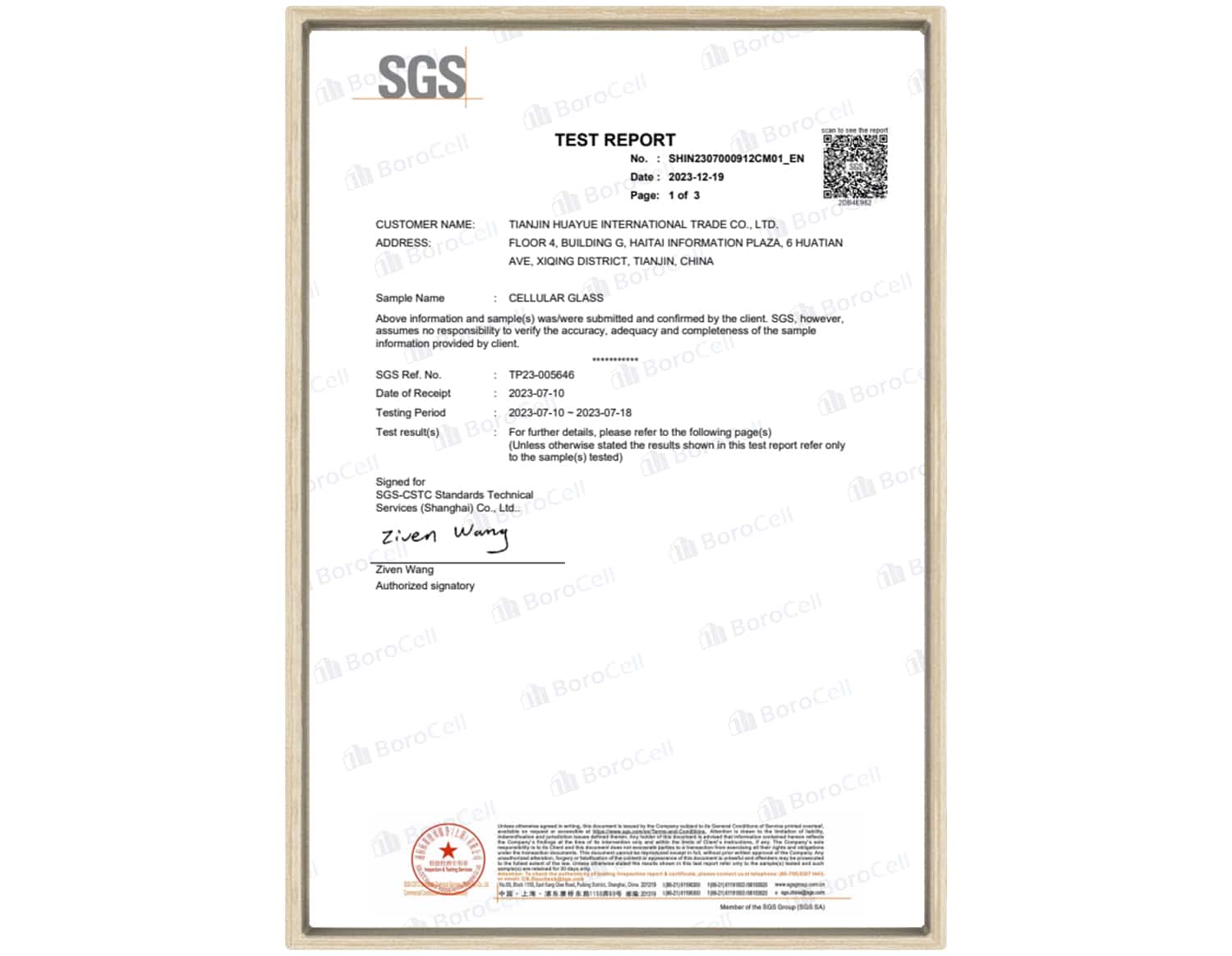
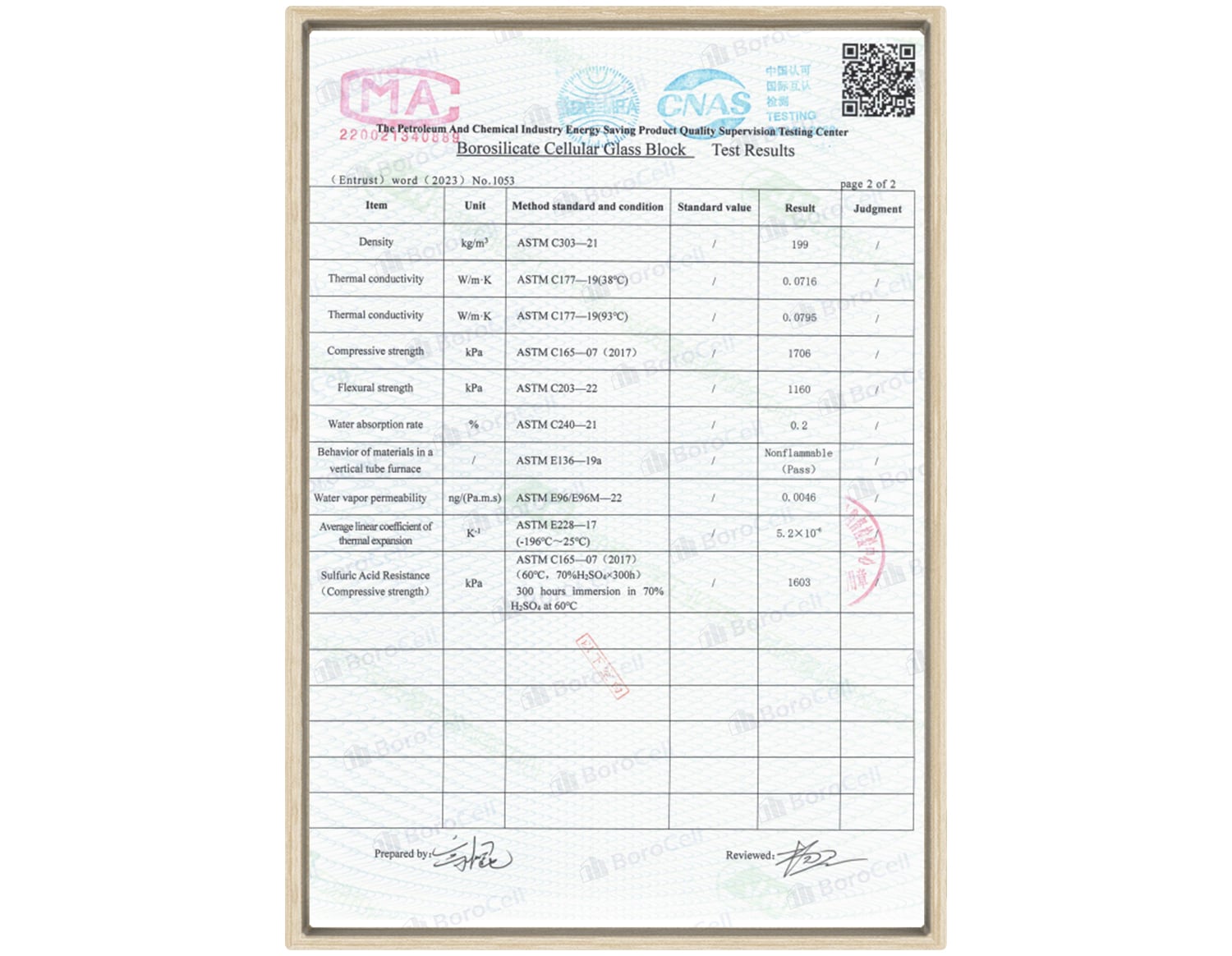
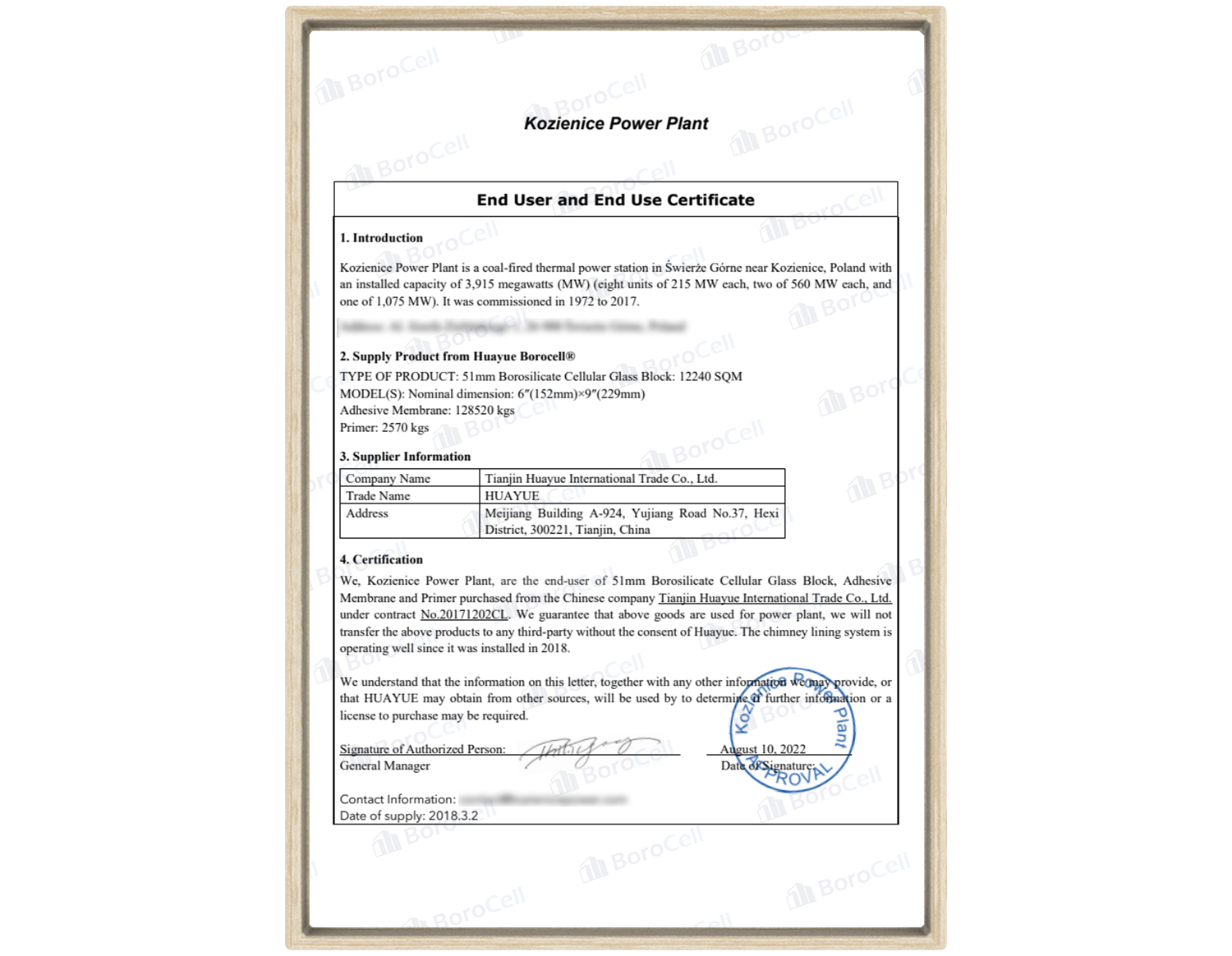
A generic ASTM, SGS or CE label is not sufficient. Documents should identify the product, test method, result, issuing body, date and scope.

Product Datasheet
Grade-specific thermal, physical, dimensional and declared service-condition information.
Test Reports
Verified reports for required properties and referenced test methods.
Quality Documentation
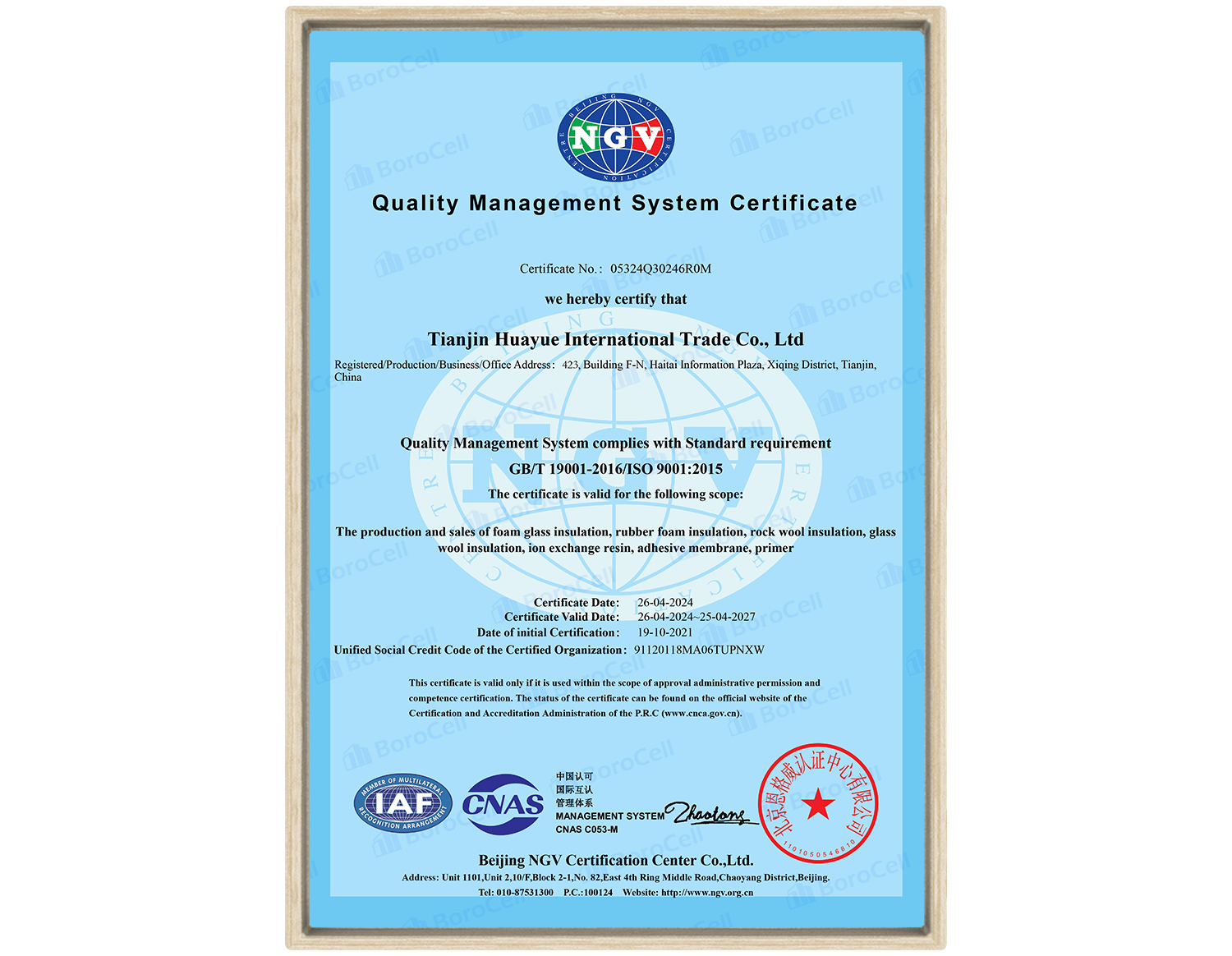
Current quality-system certificate and inspection records where applicable.
Specification Review
Compare the buyer specification with available evidence and identify gaps clearly.
Industrial Project Questions
What temperature range can your cellular glass products cover?
Temperature limits must be confirmed for the proposed grade and system. Send minimum and maximum operating temperatures, cycling conditions and ambient environment.
Does cellular glass eliminate corrosion under insulation?
No material can guarantee that alone. Cellular glass can help restrict moisture ingress, while coatings, joints, vapor barriers, cladding, inspection and installation remain essential.
Can you manufacture cellular glass pipe sections?
Fabricated sections or segments may be available subject to pipe outside diameter, insulation thickness, layers, tolerance, quantity and production review.
What information is required for tank-base insulation?
Provide tank type, medium, temperature, base geometry, loads, settlement criteria, foundation detail, required standard, quantity and location.
Can you supply load-bearing pipe-support inserts?
Possible configurations depend on support geometry, load case, contact area, temperature and safety factors. Submit the support drawing and conditions.
Can you provide test reports and certificates?
Available documents can be supplied for the proposed product. Exact report, standard, specimen and validity must be checked before submittal.
Do you support samples or trial fabrication?
Sample or prototype support may be possible depending on product form, tooling, dimensions and destination. Confirm the evaluation purpose and acceptance criteria.
- Tank base, piping, support, vessel or equipment
- Process service and operating temperatures
- Dimensions, thickness and design loads
- Required standard, test or document
- Quantity and destination
- Project schedule and delivery sequence
Need an expert? you are more than welcomed to leave your contact info and we will be in touch shortly.